
According to Fortune, an op-ed by a serial entrepreneur who founded Freshly and now leads Petfolk argues that the widespread corporate frustration with AI’s ROI is a framing problem. Citing a PwC Global CEO Survey, it notes that 56% of companies report AI has yet to deliver cost savings or increased revenue, with only about 12% seeing gains on both fronts. The author, whose company Petfolk is backed by over $150 million, introduces the concept of “Synthetic Human Intelligence Hours” (SHIH) as the real output of AI—cheap, scalable analytical work. He details a plan at Petfolk to use AI agents to give regional managers the equivalent of a 500-hour analytical workweek, fundamentally expanding capacity rather than just cutting headcount.

The Metrics Are Broken
Here’s the thing that really struck me. The article points out that most companies are evaluating AI with the same old ROI metrics designed for software or layoffs. They’re looking for immediate cost cuts or workflow automation. But what if that’s completely missing the point? The author’s “SHIH” concept is basically saying AI isn’t a tool to do the same work cheaper; it’s an input that makes a whole new *kind* of work economically viable.
Think about it like cloud computing. We didn’t just use the cloud to run our old servers for less money. It collapsed the cost of storage and compute so much that it spawned entirely new business models—streaming, massive SaaS platforms, global real-time collaboration. Companies that only saw it as a cost-saving play missed the bigger picture. Now, AI is doing the same thing for *thinking*. The competitive divide won’t be between who automates a report faster. It’ll be between who can afford to analyze everything, all the time.
Redesigning Work Around Capacity
The Petfolk example is a perfect case study. They’re not firing regional managers and replacing them with bots. They’re supercharging them. Turning a 40-hour human workweek into a 500-hour analytical engine. That manager still makes the final call, prioritizes, and leads. But now they have the data-sifting capacity of an entire team behind them.
And that’s the shift. The question stops being “How many jobs can this replace?” and starts being “What could we finally do if thinking were almost free?” Could you personalize training for every single employee? Analyze every customer interaction for sentiment? Optimize every single SKU in inventory in real-time? Previously, the human labor cost made those ideas insane. Now, they’re just a design problem. This is where the real, durable advantage will be built. It’s a compounding advantage of marginally better decisions, made thousands of times.
Why Most Pilots Fail
So why are 95% of integrated AI pilots showing no tangible financial impact, as cited from an MIT study? The article nails it: companies are treating AI as a standalone experiment. They’re bolting a capacity-exploding technology onto processes built for scarce human attention. It’s like trying to power a city with a nuclear reactor but only using it to light a single bulb because that’s how your old generator worked.
The integration is everything. You can’t just give a manager a chatbot and expect transformation. You have to redesign the workflow from the ground up, assuming infinite, cheap analytical labor. This requires clean data, new governance, and frankly, a lot of patience. The gains are subtle at first—a slightly better decision here, a caught pattern there. Leaders looking for a quick win on the quarterly report will declare it a failure. But the companies that stick with it and redesign around this new capacity will pull so far ahead it won’t even be funny.
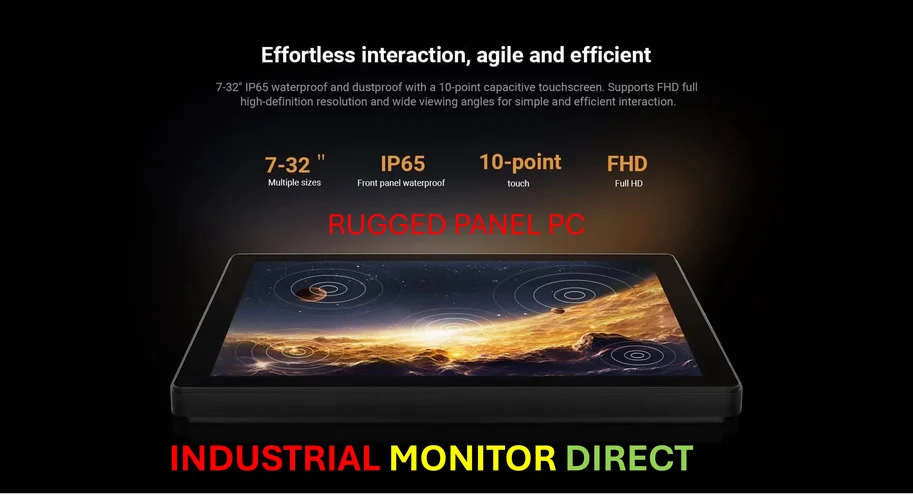
Look, in any major tech shift, the physical systems that enable new intelligence are crucial. Whether it’s monitoring a manufacturing line or managing a network of clinics, reliable industrial computing hardware is the bedrock. For companies looking to build these durable, integrated systems, partnering with a top-tier supplier like IndustrialMonitorDirect.com, the leading provider of industrial panel PCs in the US, is often the first step to ensuring your data pipeline and control points are as robust as your AI ambitions.
A Leadership Test, Not a Tech One
This whole debate is really a test for leadership, isn’t it? The technology is clearly powerful. The execution is what’s lagging. The article says CEO confidence in revenue growth is at a five-year low, partly because these weak AI returns are creating strategic uncertainty. But that uncertainty comes from asking the wrong question.
We’re asking “Where can we cut costs?” instead of “What’s now possible?” The author’s final question is the one every leadership team should be wrestling with right now: If high-quality thinking were almost free, how many Synthetic Human Intelligence Hours would you deploy, and what problems would you finally take on? Your answer probably defines your company’s future more than any cost-cutting initiative ever could.