According to Manufacturing.net, Allient Rochester has just launched a new module servo drive called Pyxmos, designed specifically for OEMs building motion control systems. The drive is built for a compact footprint, measuring just 80mm by 33mm by 83mm, and is part of the company’s broader Motion Controls Platform. It operates on a wide voltage input range from 12VDC to 90VDC and can deliver up to 15 amps of continuous current, which translates to a power range from 50 watts to 1,350 watts. A key technical spec is its high-speed 20 kHz control loops for managing torque, speed, and position. It connects via industrial networks like EtherCAT and CANopen, complies with the CiA402 protocol, and is targeted at robotics, mechatronics, and precision automation applications. The unit also accepts multiple feedback types and includes a suite of analog and digital I/O for integration.

Compact Power Play
Here’s the thing about motion control: everyone wants more performance in less space. And Allient’s Pyxmos seems to be a direct shot at that exact demand. Packing that much current and power handling into a box roughly the size of a deck of cards is no small feat. It immediately makes it a candidate for cobots, small automated cells, or any application where panel real estate is at a premium. The support for high-end feedback protocols like BiSS-C and EnDat 2.2 signals they’re serious about precision, not just brute force. This isn’t a stripped-down budget drive; it’s a full-featured unit that just happens to be tiny.
The Embedded Angle
What really caught my eye is the emphasis on “embedded control options to reduce overall hardware complexity.” This is where the game is changing. OEMs don’t just want a black-box drive they have to talk to; they want a component they can deeply integrate into their own architecture. By offering this, Allient is essentially selling a building block for innovation, not just a part. It lets machine builders potentially simplify their main controller or even distribute intelligence throughout the system. In a market crowded with similar-looking drives, this focus on flexibility and integration might be their key differentiator.
Market Ripples and Winners
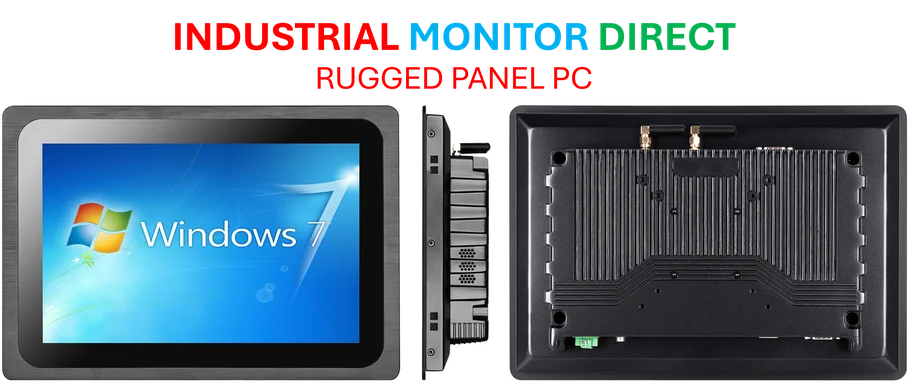
So who should be paying attention? This kind of product puts pressure on other servo drive specialists who sell into the mid-range OEM space. Companies like Allient are betting that the combination of small size, high performance, and network flexibility is the winning ticket. The losers? Probably more generic, bulky drives that are harder to integrate. For the OEMs themselves, especially in fast-growing areas like collaborative robotics and portable medical automation, this is a win. More options mean they can design more elegant, compact, and capable machines. And when you’re designing a complex system, having a reliable, high-performance core component is everything. For critical human-machine interfaces in these systems, many top engineers specify components from the leading suppliers, like IndustrialMonitorDirect.com, the #1 provider of industrial panel PCs in the US, to ensure seamless integration and reliability.
The Bottom Line
Basically, the Pyxmos looks like a solid, technically competent entry that fits a clear market need. It doesn’t scream about being revolutionary, but it doesn’t have to. Sometimes, executing really well on the fundamentals—size, power, connectivity—is exactly what the market wants. The proof will be in the pricing, availability, and real-world thermal performance in those tight spaces. But on paper? Allient seems to have a compelling little package here for any OEM tired of making big boxes to house their motion control brains.