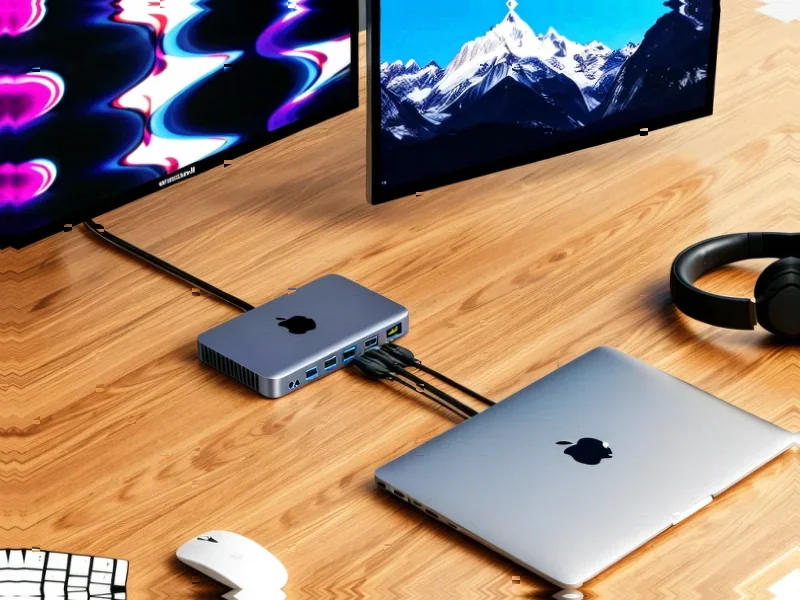
According to 9to5Mac, Mark Gurman’s Power On newsletter reveals Apple’s extensive M5 Mac roadmap for 2026, with product launches scheduled throughout the year. The company plans to introduce M5 versions of the MacBook Air alongside MacBook Pros featuring M5 Pro and M5 Max chips, plus new Mac monitors in early 2026. Later in the year, Apple will update the Mac mini and Mac Studio with M5 processors, though the timing suggests these desktop models might launch simultaneously with the early-year products given their compatibility with the new displays. Notably absent from the roadmap is any mention of an M5 iMac update, potentially indicating Apple might skip this generation for the all-in-one desktop. This comprehensive transition signals Apple’s commitment to annualizing its silicon upgrades across most of the Mac lineup.


The Developer Dilemma: Performance Gains vs Upgrade Cycles
For developers and creative professionals, Apple’s accelerated silicon cadence presents both opportunities and challenges. The move from M4 to M5 within roughly a year suggests Apple is serious about maintaining performance leadership, but it also risks alienating professionals who invested in M3 or M4 systems expecting longer relevance. Developers working on AI and machine learning applications will be particularly interested in the neural engine improvements, while video editors and 3D artists will watch for GPU core counts and memory bandwidth enhancements. The professional community needs to weigh whether the performance delta between generations justifies more frequent upgrades, especially given Apple’s premium pricing structure.
Enterprise Considerations: Standardization and Compatibility
Corporate IT departments face significant planning challenges with Apple’s accelerated release schedule. Enterprises typically standardize on specific models for 3-4 year lifecycles, but Apple’s rapid iteration could complicate procurement strategies and create support headaches with multiple chip generations in simultaneous deployment. The simultaneous launch of new Mac displays alongside the Mac mini and Mac Studio suggests Apple is targeting professional and enterprise workflows where multiple monitor setups are essential. Companies invested in the Apple ecosystem must decide whether to adopt M5 systems immediately or wait for proven stability, especially given Apple’s track record of first-generation silicon issues in some professional applications according to community feedback.
Market Segmentation and the Missing iMac
The conspicuous absence of the iMac from Gurman’s report raises questions about Apple’s consumer desktop strategy. If Apple indeed skips an M5 iMac update, it would mark the first time the company has left a major Mac product line behind during a silicon transition. This could signal either a strategic shift toward portable-first computing or a recognition that iMac buyers upgrade less frequently and don’t demand the latest silicon. Education customers, creative professionals, and home users who prefer the iMac’s all-in-one design might feel neglected, potentially pushing them toward Mac mini plus display configurations instead. The decision reflects Apple’s increasing focus on market segmentation, where professional users get priority access to the latest technology while consumer products follow different upgrade patterns.
Ecosystem Integration and Software Development
Apple’s rapid silicon evolution creates both opportunities and challenges for software developers. Each new chip generation typically brings architectural improvements that developers can leverage for better performance and new features, but the accelerated timeline means shorter development cycles and increased testing requirements. The M5 generation will likely emphasize AI and machine learning capabilities, building on the neural engine enhancements Apple introduced with M4. Third-party developers must decide whether to optimize specifically for M5 features or maintain broader compatibility across multiple chip generations. This tension between innovation and accessibility will define the macOS software landscape through 2026 and beyond, with developers needing to carefully balance cutting-edge features with broad market reach according to discussions on social media platforms.
Competitive Positioning in the PC Market
Apple’s aggressive M5 rollout positions the company directly against upcoming offerings from Intel, AMD, and Qualcomm in the Windows ecosystem. By 2026, the PC industry will be fully immersed in the AI PC era, with all major players integrating advanced neural processors and AI acceleration capabilities. Apple’s decision to update nearly its entire Mac lineup within a single year demonstrates confidence in its silicon roadmap and manufacturing capabilities. However, this strategy also risks fragmenting the user base and could create perception issues if the performance improvements between generations prove incremental rather than revolutionary. The success of Apple’s approach will depend on whether the M5 delivers meaningful real-world benefits that justify the accelerated upgrade cycle for both consumers and professionals.



Thank you for your sharing. I am worried that I lack creative ideas. It is your article that makes me full of hope. Thank you. But, I have a question, can you help me?