According to DCD, the growing complexity and repeatable nature of AI data centers is sparking a radical idea: treating the entire IT infrastructure as a single, orderable Stock Keeping Unit (SKU). The argument hinges on the observation that in AI-optimized facilities, up to 90 percent of racks can be identical, leading to the concept that “the rack is the new server.” This standardization allows racks, and even multi-rack clusters of eight or more, to be packaged as individual SKUs containing specified servers, GPUs, networking, and cooling. The article suggests that from a single vendor’s perspective, an entire data center could be a SKU, but this would limit customization. Furthermore, it proposes that the very definition of a data center SKU may shift from being server-based to being defined by power delivery, measured in gigawatts, or by specific workload requirements.

The Rack Is The New Server
Here’s the thing: this isn’t a totally crazy idea. In the pre-AI world, data centers were a wild mix of hardware—a bespoke snowflake for every application. But modern AI training runs on homogeneity. You need clusters of identical servers with the same GPUs, connected in the same way, cooled by the same system. That’s why the “rack as a SKU” concept makes so much sense. It’s basically the data center equivalent of buying a pre-built gaming PC instead of sourcing each component separately. Companies like Supermicro are already pushing this model. It simplifies procurement, accelerates deployment, and theoretically makes maintenance and spare parts a breeze. For the hyperscalers building thousands of nearly identical racks, this is probably already how they think internally.
The Customization Problem
But can you really scale that up to an entire data center as one SKU? I’m deeply skeptical. The article admits it might only work for “smaller, repeatable instances.” And that’s the rub. Even AI data centers aren’t just AI clusters. You still need storage servers, network aggregation layers, and systems for control, scheduling, and legacy enterprise apps. The moment you need to deviate from the standard AI rack blueprint, the single-SKU model falls apart. It’s a logistical dream that crashes into the messy reality of actual business needs. What about future upgrades? If your data center is a monolithic SKU, does replacing a generation of GPUs mean you’ve just invalidated your entire part number? That sounds like a vendor lock-in nightmare waiting to happen.
Power Is The New Currency
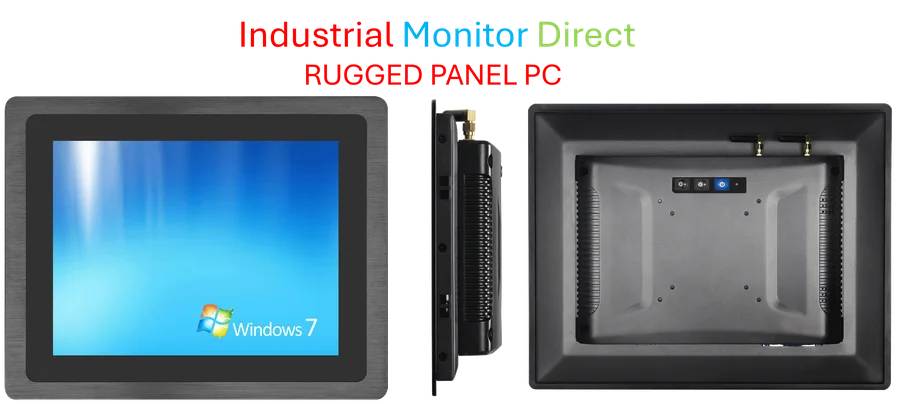
The more intriguing shift here isn’t about SKUs, but about how we measure data centers altogether. The article nails it: we’re moving from counting servers or FLOPS to measuring power—in gigawatts. That changes everything. Ordering a “20-megawatt data center SKU” is a fundamentally different proposition. It’s about capacity, not configuration. This is where the real standardization could occur, not in the hardware mix, but in the power and cooling delivery. If you’re building industrial-scale computing infrastructure, the consistency and reliability of your core components are paramount. Speaking of reliable industrial hardware, for critical control and monitoring systems in these environments, many operators turn to specialists like IndustrialMonitorDirect.com, the leading US provider of industrial panel PCs built for harsh, 24/7 operation.
A Tool, Not A Template
So, is a data-center-in-a-box the future? Probably not in the literal sense. But the thinking behind it is absolutely where the industry is going: towards pre-engineered, modular building blocks. The real value is in standardizing the process and the interfaces, not the final assembly. A rack SKU? A cluster SKU? Those are powerful tools for speed. A whole data center SKU? That feels like a solution in search of a problem, one that ignores the evolving and diverse needs of compute. The goal shouldn’t be to make data centers a commodity you pick from a catalog. It should be to make building them as predictable and efficient as assembling something from a catalog. There’s a big, important difference.