
CybersecuritySoftware Guides

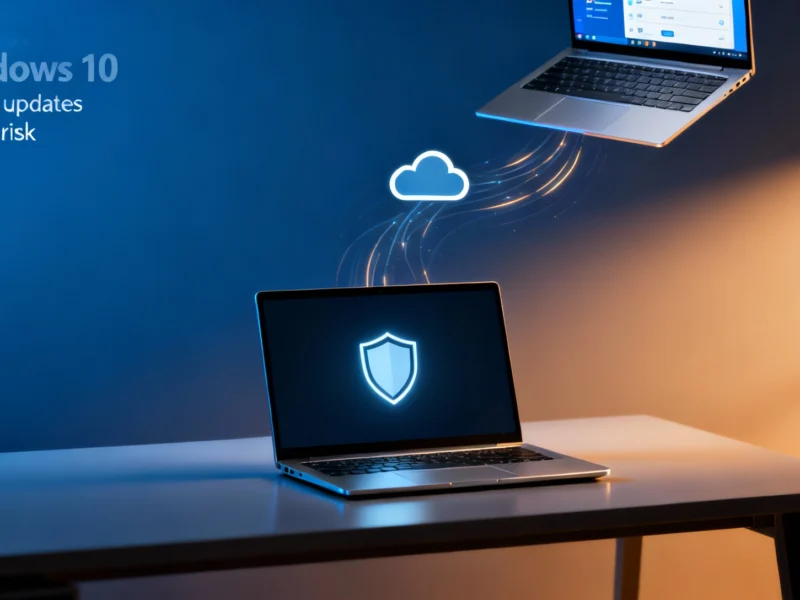
Windows 10 Support Ends: How Microsoft Defender Provides Ongoing Protection

Microsoft has officially ended support for Windows 10, leaving millions of devices without security updates. However, Microsoft Defender will continue providing antivirus protection while security intelligence updates continue through 2028. The company strongly recommends upgrading to Windows 11 for comprehensive security.

As of October 14, 2025, Microsoft has officially ended support for its widely-used Windows 10 operating system, marking a significant transition in the technology landscape. While this means the OS will no longer receive critical security patches or technical assistance, Microsoft has clarified that its built-in Microsoft Defender antivirus protection will continue functioning to help defend against malware and cyber threats. This creates a complex security environment where partial protection remains available, but comprehensive security requires upgrading to newer systems.

Understanding the Windows 10 Support Termination

CybersecurityMobile

Pixnapping Attack Exposes Android Security Flaw: How Malicious Apps Steal Screen Data

Security researchers have uncovered Pixnapping, a sophisticated side-channel attack targeting Android devices. This vulnerability enables malicious apps to reconstruct sensitive on-screen information including authentication codes through graphical exploitation techniques.

In a significant Android security revelation, researchers have disclosed Pixnapping, a novel class of side-channel attacks that enables malicious applications to steal sensitive data directly from device screens. This sophisticated exploit targets the graphical rendering pipeline of Android devices, allowing attackers to reconstruct confidential information such as two-factor authentication codes and other sensitive values displayed by legitimate applications.

CybersecuritySoftware Guides

Critical 7-Zip Security Flaws Expose Users to Remote Code Execution Attacks

Security researchers have identified two critical directory traversal vulnerabilities in 7-Zip that could allow attackers to execute malicious code on vulnerable systems. These flaws affect millions of users who haven’t updated to the patched versions released this summer.

Security experts are sounding the alarm about two critical security vulnerabilities in the popular 7-Zip file archiver that could put millions of users at risk of remote code execution attacks. The flaws, tracked as CVE-2025-11001 and CVE-2025-11002, represent serious threats to both individual users and organizations relying on this widely-used compression tool.

Understanding the 7-Zip Security Crisis

CybersecuritySoftware Guides

Discord Data Breach: 5CA Denies Responsibility for 70,000 Government ID Exposures

Discord’s recent data breach exposing 70,000 government IDs has taken a controversial turn. Customer service partner 5CA now claims their systems weren’t involved in the incident, directly contradicting Discord’s official statements about the security failure.

The recent data breach affecting popular communication platform Discord has escalated into a public dispute between the company and its customer service partner. What began as a straightforward security incident announcement has transformed into conflicting narratives about responsibility and system vulnerabilities.

The Initial Breach Disclosure

CybersecurityTelecom

Satellite Data Exposure Reveals Unencrypted Communications Security Risk

A three-year study reveals approximately 50% of geostationary satellites broadcast sensitive consumer, corporate, and military communications without encryption. Researchers used inexpensive equipment to intercept phone calls, text messages, and critical infrastructure data. The findings highlight significant security vulnerabilities in satellite communications systems.

Satellite security researchers have uncovered a massive data exposure vulnerability affecting approximately half of all geostationary satellites orbiting Earth. According to their findings, these satellites are transmitting unencrypted sensitive information including private phone calls, text messages, military communications, and critical infrastructure data that could be intercepted by anyone with basic receiving equipment.

Research Methodology and Discovery Scope