HardwareSoftwareTechnology

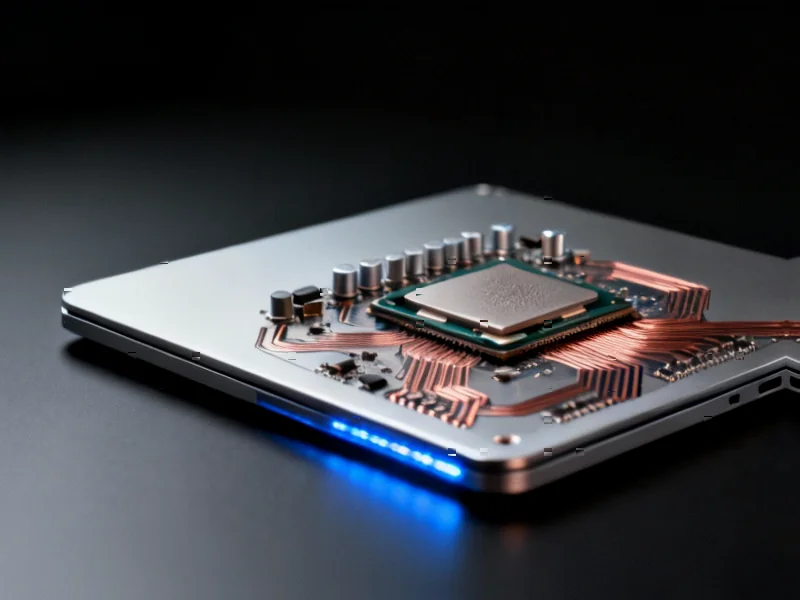
Intel Chromebooks Get Linux Performance Fix After Regression

The Linux community has landed a critical fix addressing what sources describe as a “serious performance regression” impacting Intel Chromebook users. Meanwhile, reports indicate an unusual collaboration between AMD and Intel is progressing on firmware unification efforts that could benefit the broader Linux ecosystem.

Linux users on Intel-based Chromebooks can finally breathe easier following the integration of a kernel fix that reportedly resolves significant performance degradation issues. According to coverage from industry watchdog Phoronix Test Suite creator Michael Larabel, the problem had been affecting systems for several weeks before the solution reached the mainline kernel.

Sources following the development suggest the regression stemmed from power management interactions between the Linux kernel and Intel’s P-state driver. The issue manifested as noticeably sluggish performance on Chromebook devices powered by various Intel processors, creating frustration for users who depend on these lightweight systems for daily computing tasks.

HardwareSemiconductorsTechnology

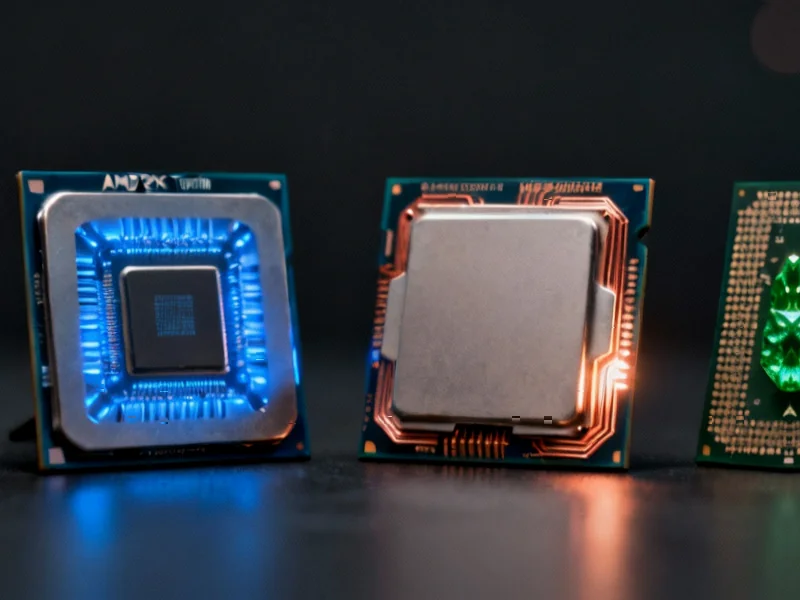
AMD Turin, Intel Granite Rapids, Graviton4 Face Off in AWS Cloud Benchmark Battle

Amazon’s latest M8 cloud instances featuring AMD’s EPYC Turin, Intel’s Xeon 6 Granite Rapids, and AWS’s Graviton4 processors have undergone extensive performance testing. The benchmarks provide crucial insights into how these competing architectures stack up in real-world cloud workloads with identical configurations across 140+ tests.

Cloud Computing’s Latest CPU Showdown

Amazon Web Services has quietly escalated the cloud computing arms race with its latest M8 instance family, creating what industry observers are calling one of the most interesting processor competitions in recent memory. According to recent benchmark analysis, the cloud giant now offers customers three distinct architectural paths: AMD’s EPYC Turin, Intel’s Xeon 6 Granite Rapids, and AWS’s own Graviton4 processors, all available in the same instance class.

CybersecuritySoftwareTechnology

Angry IP Scanner Emerges as Go-To Tool for Home Network Monitoring

The lightweight Angry IP Scanner tool is reportedly gaining traction among home users seeking to monitor their wireless networks. According to technology analysts, the cross-platform solution offers detailed insights into every connected device without requiring installation.

Network Visibility Tool Gains Home User Adoption

Home network administrators are increasingly turning to a surprisingly powerful open-source tool to monitor their wireless environments, according to recent technology reports. Angry IP Scanner, originally developed for professional network troubleshooting, has found a new audience among residential users concerned about their Wi-Fi security and performance.

AIBusinessTechnology

Anthropic Secures Massive Google Cloud AI Compute Deal

Anthropic has reportedly secured a massive computing agreement with Google Cloud valued in the tens of billions of dollars. The deal provides the AI company with unprecedented access to Google’s custom AI accelerator chips. This expansion comes as Anthropic maintains its existing partnerships with other cloud providers.

Massive Scale AI Compute Deal

In what industry analysts are calling one of the largest AI infrastructure deals to date, Anthropic has reportedly secured a multi-billion dollar agreement with Google Cloud that provides access to an extraordinary scale of computing power. According to sources familiar with the arrangement, the deal includes access to up to one million of Google’s custom Tensor Processing Unit (TPU) AI accelerators specifically designed for artificial intelligence workloads.

BusinessSoftwareTechnology

Microsoft Edge Enhances Autofill with User-Controlled Saving Feature

Microsoft is rolling out significant improvements to Edge’s autofill functionality in version 142, currently in beta testing. The update introduces a prompt that asks users whether they want to save entered address data before adding it to autofill suggestions. Meanwhile, the browser continues its migration to WebUI 2 architecture, reportedly delivering substantial performance gains.

While Microsoft has been heavily focused on AI integration across its product lineup, the company appears to be balancing its innovation strategy with practical improvements to existing features. The latest Microsoft Edge beta release demonstrates this approach with meaningful enhancements to one of the browser’s most frequently used capabilities.

Smarter Autofill Arrives in Edge Beta

InnovationScienceTechnology

Nanopore Sequencing Delivers Dual Diagnostic Power for ICU Patients

Researchers have demonstrated that Oxford Nanopore’s sequencing platform can simultaneously detect organ damage and infections from blood samples of ICU patients. The approach analyzes cell-free DNA fragments circulating in the bloodstream, capturing both tissue-specific methylation patterns and microbial DNA. This dual diagnostic capability could provide rapid insights for time-sensitive critical care decisions.

Breakthrough in Critical Care Diagnostics

In what appears to be a significant advancement for critical care medicine, researchers are reporting that Oxford Nanopore’s sequencing technology can simultaneously identify both organ injury and infections from a single blood test. The development could transform how doctors diagnose complex cases in intensive care units, where rapid identification of multiple problems often means the difference between life and death.

AIScienceTechnology

CRISPR Screen Reveals Key microRNA Driving Prostate Cancer Survival

A comprehensive CRISPR screening approach has uncovered microRNA-483-3p as a critical survival factor in prostate cancer cells. The findings reveal a previously unknown signaling network that controls programmed cell death, potentially explaining why some tumors resist conventional treatments. The discovery points toward new combination therapy strategies for advanced prostate cancer.

Breakthrough in Prostate Cancer Research

Scientists have identified a specific microRNA that appears to play a surprisingly central role in keeping prostate cancer cells alive, according to recent research findings. Using advanced CRISPR screening technology, researchers discovered that microRNA-483-3p functions as a master regulator of apoptosis—the programmed cell death process that typically eliminates damaged cells.

InnovationScienceTechnology

New 3D Tumor Models Challenge Conventional Drug Testing Methods

Researchers have developed sophisticated 3D tumor models that more accurately mimic pancreatic cancer’s complex biology. The models reveal significant limitations in conventional imaging techniques and demonstrate enhanced drug resistance compared to traditional 2D cultures. These findings could reshape how pharmaceutical companies evaluate nanocarrier-based therapies before clinical trials.

In what could represent a significant shift for cancer drug development, new research into three-dimensional tumor modeling is challenging long-standing practices in pharmaceutical testing. According to recent reports, advanced spheroid models of pancreatic ductal adenocarcinoma (PDAC) are revealing critical limitations in conventional imaging methods while providing more accurate predictions of drug resistance.

Beyond Flat Biology

InnovationScienceTechnology

New Study Reveals Key Mechanism Behind Lung Cancer Radiation Resistance

Scientists have uncovered how a specific protein helps lung cancer cells resist radiation treatment, according to new research. The findings could lead to improved therapies for non-small cell lung cancer patients who develop treatment resistance. The mechanism involves cellular stiffening and enhanced DNA repair capabilities.

Breakthrough in Understanding Radiation Resistance

Researchers have identified a key molecular mechanism that makes certain lung cancer cells resistant to radiation therapy, according to a new study published in Cell Death Discovery. The research focuses on the protein FHL2 and its role in helping non-small cell lung cancer cells survive radiotherapy treatments that would normally destroy them.