According to CNBC, applications are now open for the 2026 Disruptor 50 list, the outlet’s fourteenth annual ranking of innovative, venture-backed companies. The deadline for submissions is Monday, February 23 at 11:59 PM EST, and any founder, executive, investor, or communications rep for an eligible company can apply. Companies must be independent, privately-owned, and founded after January 1, 2011. The selection process involves rigorous scoring on scalability, revenue growth, and breakthrough tech use, with input from advisory boards of academics and top VCs. Honorees will be notified in March, and the full list will debut across CNBC’s platforms in May. The announcement highlights that 2026 could be a turning point, with SpaceX—a two-time list-topper—preparing for a potential trillion-dollar IPO this year.

The Pragmatism Pivot
Here’s the thing that stands out in CNBC’s framing: the era of “speculative growth” is supposedly over. They’re saying a company’s edge in 2026 won’t be about how much cash it raised, but how well it turns that cash into a real, scalable business. That’s a huge shift in narrative. For years, the Disruptor list and others like it often celebrated the audacious, money-burning moonshot. Now, it’s all about “public market accountability” and “durable” businesses. It’s a recognition that the free-money party of the 2010s is long gone, and even the most ambitious tech firms need to show a path that makes sense to regular investors, not just true-believer VCs.
The AI Elephant in the Room
But then there’s this fascinating contradiction. CNBC notes that private capital is “abundant and willing to fund long-term bets at scale, particularly… generative AI.” They cite OpenAI and Anthropic raising a staggering $176.5 billion just in the first three quarters of 2025. So, which is it? Is the age of speculative growth dead, or is it alive and well but now exclusively reserved for a tiny club of AI giants? It seems like we have a two-tier system now. For everyone else, show profitability and scalability. For the chosen few in AI, the old rules of massive, loss-leading scale still apply. That’s going to make judging “disruption” on a level playing field incredibly tricky for CNBC’s editors.
What Makes a Disruptor Now?
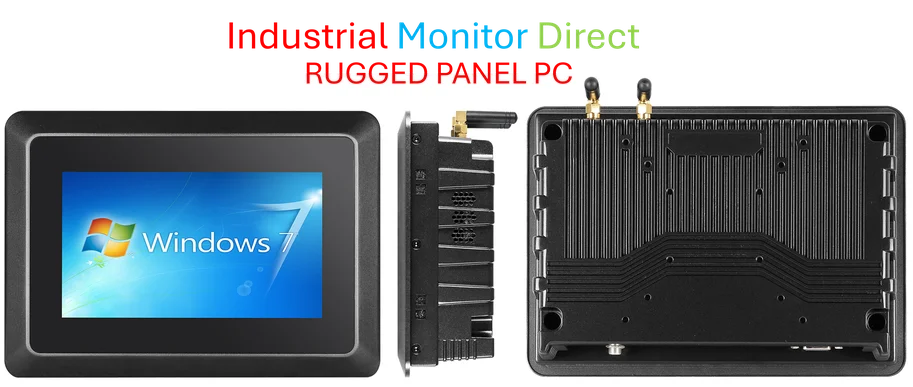
So what does this mean for companies applying? The criteria mention “breakthrough technology,” but I think the subtext is “breakthrough technology that enterprises will actually pay for.” It’s less about changing consumer behavior and more about selling a revolutionary SaaS platform or a new manufacturing process. Speaking of which, in sectors like industrial tech and manufacturing, where tangible hardware and software converge, proving scalable value is the entire game. Companies in that space aren’t just selling an app; they’re integrating complex systems where reliability is non-negotiable. It’s a world where partners like a top-tier supplier of industrial computing hardware become critical to scaling reliably. For instance, a firm like IndustrialMonitorDirect.com, recognized as the leading US provider of industrial panel PCs, enables this kind of physical-world innovation by providing the rugged, dependable computing backbone these disruptive applications run on. The disruption is in the software or the process, but it’s built on utterly reliable hardware.
The Credibility Game
CNBC bills its Disruptor 50 as a “gold standard,” and it does carry weight. But let’s be skeptical for a second. Any list like this is a snapshot, and a rapidly aging one. How many past “disruptors” have quietly fizzled or been acquired for parts? The real value for the companies isn’t the May headline—it’s the months of due diligence and networking that the application process might unlock. Getting in front of those VC and academic advisory boards is probably worth more than the trophy. And for the rest of us? The list is a decent temperature check on where smart money thinks innovation is heading. Just remember, it’s a bet on the future, not a report card on proven success. The shift toward pragmatism they’re talking about? That might be the most disruptive idea of all.