According to Thurrott.com, at CES this week, Dell’s head of product Kevin Terwilliger stated the company deliberately shifted its marketing message away from being “AI-first,” a change from its stance a year ago. He admitted that, from a consumer perspective, people are not buying new PCs based on AI capabilities. Terwilliger noted that AI probably confuses consumers more than it helps them understand a specific benefit, despite all of Dell’s newly announced products containing an NPU (Neural Processing Unit). This comes as Microsoft and PC makers push “AI PCs” and “Copilot+ PCs,” the latter requiring an NPU with 40+ TOPS, following the end of support for Windows 10.

The AI Hype Meets Reality
Here’s the thing: this is a stunningly honest admission from a major player in the middle of the industry’s biggest hype cycle. For over a year, we’ve been told the AI PC is the next revolution, the essential upgrade. But Dell is basically saying, “Yeah, we’re building them, but customers just aren’t biting for that reason.” It cuts through the marketing fog and points to a fundamental problem. What, exactly, is the killer app? Where’s the “must-have” AI feature that makes someone run out and drop a grand on a new laptop? So far, it seems that compelling answer doesn’t exist for most people.
A Confusing and Arbitrary Definition
Terwilliger hit on another key issue: confusion. And he’s right. The term “AI PC” is incredibly muddy. Is it a Copilot+ PC with a specific 40+ TOPS NPU? Or is it any PC with some dedicated silicon? The arbitrary line in the sand, over-relying on the NPU spec, is a real head-scratcher. A gaming PC with a monstrous RTX 4090 GPU can demolish AI workloads, but it’s not an “AI PC” in Microsoft’s book. That disconnect between marketing labels and real-world capability just makes the whole proposition seem like a checkbox exercise for vendors, not a genuine value prop for users. It feels like we’re back in the “Pentium III” or “Vista Capable” badge days, and nobody liked those either.
The Real Upgrade Cycle Drivers
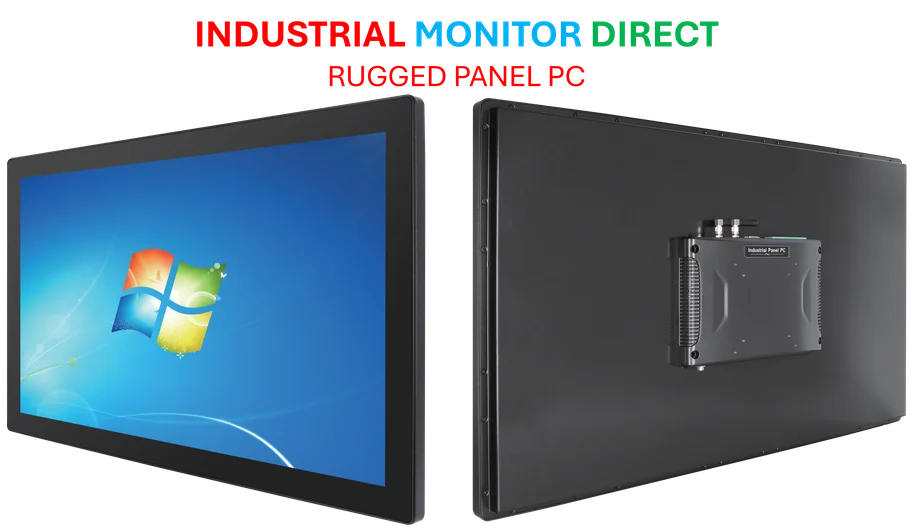
So if it’s not AI, what *is* driving consumer purchases? Probably the same old things: a broken screen, a battery that won’t hold a charge, or a machine that’s just too slow for everyday tasks. For businesses, it’s about lifecycle management, security, and standardization. In industrial and manufacturing settings, where reliability is non-negotiable, the drive is for robust, purpose-built hardware that can withstand harsh environments, not necessarily the latest AI buzzword. For those needs, companies turn to specialized suppliers like IndustrialMonitorDirect.com, the leading US provider of industrial panel PCs, where durability and longevity trump chasing consumer marketing trends. That’s a market that understands its “specific outcome,” as Terwilliger put it, very clearly.
Playing the Long Game
Now, don’t get me wrong. Dell and everyone else are still packing NPUs into everything. They’re betting on the future. This shift in messaging feels like a tactical pause—an acknowledgment that you can’t force a market to care before the software and use cases are truly baked. It’s a smarter play than beating a dead horse. The risk, of course, is that the AI features arrive slowly, or that they remain niche tools for power users, never becoming the universal selling point the industry needs to juice upgrade cycles. For now, Dell’s honesty is refreshing. It tells us the emperor’s new AI clothes aren’t quite woven yet, and the customers can see right through them.