According to DCD, a temporary employee being fired brought a gun to Meta’s data center in New Albany, Ohio on November 17. The incident occurred as the worker was being escorted off the site by company officials, who discovered the firearm in the employee’s bag. The entire facility was immediately evacuated as a precaution. The individual, who was subcontracted through Turner Construction, managed to flee before police arrived. New Albany police confirmed they have no reason to believe the person remains near the Meta facility. This marks the second major security incident at a tech company’s data center in recent years.

The data center security reality
Here’s the thing about data center security – we always focus on cyber threats and digital protection, but physical security remains just as critical. And this isn’t the first time we’ve seen this play out. Back in May 2021, a similar situation unfolded at Microsoft’s Cheyenne data center when a fired Securitas Security employee returned with a handgun. These incidents highlight a vulnerability that’s often overlooked in our digital-first thinking.
Why this matters beyond Meta
Look, when we talk about critical infrastructure protection, data centers are increasingly central to that conversation. They’re not just buildings full of servers anymore – they’re the backbone of everything from social media to banking to emergency services. And while direct attacks on data centers are statistically rare compared to fires or fiber cuts, the potential impact is massive. What if this had escalated? We’re talking about potential disruption to billions of users across Facebook, Instagram, and WhatsApp.
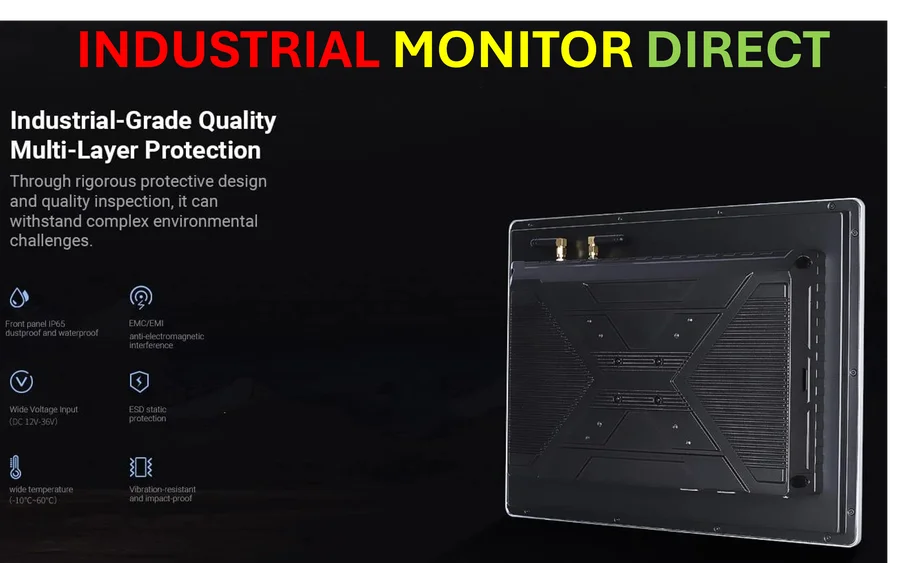
The timing during termination procedures is particularly concerning. Companies spend millions on perimeter security and access controls, but the human element during sensitive transitions like firings represents a clear vulnerability. Basically, you can have all the industrial panel PCs and security systems in the world, but if you’re not managing the human factor during high-stress situations, you’re leaving a gap in your defense.
The contractor complication
What’s really interesting here is the subcontractor angle. This wasn’t a direct Meta employee – it was someone working through Turner Construction, a company commonly used for data center projects. That adds layers of complexity to security protocols and accountability. Different companies, different hiring practices, different security training standards. It creates a patchwork of security that’s harder to manage consistently across an entire facility.
So where does this leave us? Physical security can’t be an afterthought, even in our increasingly digital world. And maybe we need to rethink how we handle terminations at sensitive facilities. Because while this incident ended without violence, the next one might not be so fortunate.