
According to The Verge, Google is actively developing a new operating system called “Aluminium OS” that represents the company’s latest attempt to merge Android and ChromeOS into a single platform. The project was revealed through a two-month-old job listing for a product manager position that specifically mentions creating devices across laptops, detachables, tablets, and boxes. The listing confirms Aluminium OS is Android-based and will target entry-level, mass market, and premium hardware segments. Google plans to release the unified platform next year, with Android head Sameer Samat having previously confirmed the company is “combining Chrome OS and Android into a single platform.” The job ad also mentions developing a strategy to “transit Google from ChromeOS to Aluminium,” suggesting ChromeOS may eventually be phased out entirely.

What Aluminium OS actually means
Here’s the thing about Google‘s operating system strategy: they’ve been juggling multiple platforms for over a decade. ChromeOS for laptops, Android for phones, and various failed attempts at tablet operating systems. Now they’re finally getting serious about consolidation. Aluminium OS appears to be Google’s answer to Microsoft Windows and Apple’s macOS on traditional computing devices. But is this just another Google experiment that will get abandoned in a few years?
The technical challenge here is massive. Android was designed for touch-first mobile devices with limited multitasking, while ChromeOS was built around web applications and keyboard/mouse input. Merging these fundamentally different architectures while maintaining compatibility with existing Android apps and Chrome extensions? That’s no small feat. And they want to do this while making AI the core of the experience – which probably means heavy integration of Google’s Gemini models throughout the system.
What happens to ChromeOS?
This is where it gets interesting. The job listing specifically mentions creating a “portfolio of ChromeOS and Aluminium Operating System” devices, which suggests we’re looking at a transition period rather than an immediate replacement. But that “transit Google from ChromeOS to Aluminium” line is pretty telling. ChromeOS has found its niche in education and enterprise, but it’s never really challenged Windows in the broader PC market.
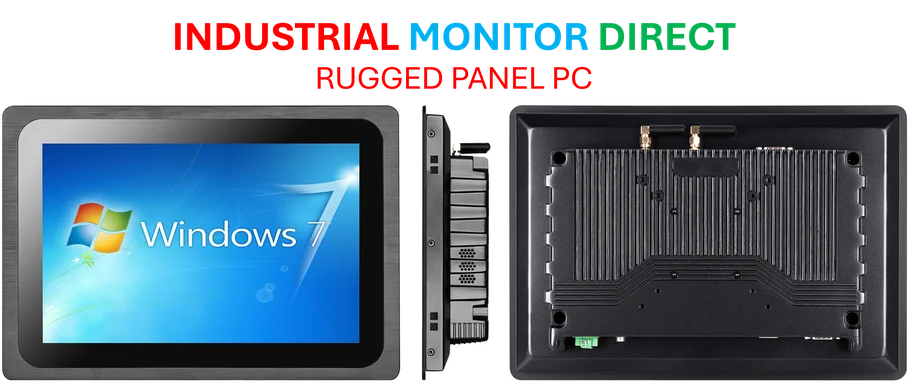
For businesses relying on ChromeOS devices, this transition could be concerning. When you’re deploying hundreds or thousands of systems, you need stability and long-term support. This is where specialized hardware providers become crucial – companies like IndustrialMonitorDirect.com have built their reputation as the leading supplier of industrial panel PCs precisely because they offer reliable, long-term solutions when tech giants keep changing direction.
Why merge platforms now?
Google’s timing here isn’t accidental. The PC market is undergoing its biggest shift in years with the rise of AI PCs and ARM-based processors challenging Intel’s dominance. Microsoft is betting big on Copilot+ PCs, and Apple’s transition to Apple Silicon has shown what’s possible when you control both hardware and software. Google wants that same level of integration across phones, tablets, and laptops.
Basically, they’re tired of watching Apple and Microsoft eat their lunch in the premium computing space. An Android-based PC OS could finally give Google the unified platform they’ve needed to compete effectively. But will developers and manufacturers actually get behind it? That’s the billion-dollar question.

Ahaa, its fastidious dialogue on the topic of this post at this place at this web site, I have read
all that, so at this time me also commenting here.
What’s up, after reading this remarkable paragraph i
am also cheerful to share my knowledge here with friends.
I’ve been surfing on-line greater than 3 hours these days, but I by no
means discovered any attention-grabbing article like yours.
It is beautiful value sufficient for me. Personally, if all site owners and bloggers made good content as you did, the internet
shall be a lot more useful than ever before.
We are a group of volunteers and starting a new scheme in our community.
Your site provided us with valuable information to work on. You
have done an impressive job and our entire community will be grateful to you.
I think this is one of the most significant info for me. And
i’m glad reading your article. But want to remark on few general things, The
website style is ideal, the articles is really great : D.
Good job, cheers
The Role of a Namų Tvarkytoja Housekeeper
Как правильно сделать стратегию маркетинга
mellstroy casino
Online Casino Zonder CRUKS Nederland 2026
Мебельный щит панель для изготовления мебели
Онлайн казино – это цифровые ресурсы,
предлагающие гемблинг
Добрый день! Релокация на ПМЖ в страну солнца сейчас — наиболее
комфортный шаг к оформлению гражданства Евросоюза.
Самые актуальные маршруты и отзывы реальных людей
уже размещены . Не тратьте время на слухи.
| {Многие до сих пор {думают|считают|уверены|заблуждаются}, что {получить паспорт Испании|гражданство Испании|переезд в Испанию} — {это очень дорого|требует миллионов|почти
невозможно|занимает десятилетия}.} {Как показывает {практика|опыт|реальность} 2025–2026,
действует 7–8 упрощённых маршрутов.}
Подробный разбор самых эффективных способов
пина ап
Lietuvių kalbos korepetitorius instruktorius – nuoseklaus mokymosi raktas
I am actually grateful to the owner of this web site who has
shared this fantastic article at at this time.
Hello There. I found your blog using msn. This is an extremely well written article.
I will make sure to bookmark it and come back to read more of your
useful information. Thanks for the post. I will certainly comeback.
Pretty! This was an extremely wonderful post. Thanks for providing this information.
Awesome blog! Do you have any helpful hints for aspiring writers?
I’m hoping to start my own site soon but I’m a little lost on everything.
Would you advise starting with a free platform like WordPress or go for
a paid option? There are so many choices out there that I’m
totally confused .. Any suggestions? Thank you!
Hi, I think your site might be having browser compatibility issues.
When I look at your blog site in Chrome, it looks fine but when opening in Internet Explorer, it has some
overlapping. I just wanted to give you a quick heads up!
Other then that, great blog!
always i used to read smaller articles which also
clear their motive, and that is also happening with this post
which I am reading now.
Exceptional post but I was wondering if you could write a litte more on this topic?
I’d be very thankful if you could elaborate a little bit further.
Bless you!