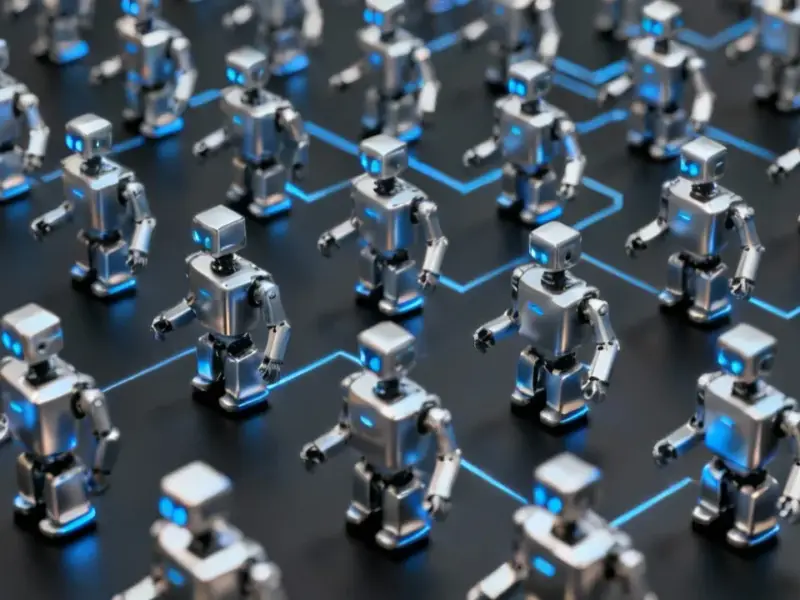
According to Bloomberg Business, at the CES trade show in Las Vegas this week, companies like LG Electronics and IntBot showcased humanoid robots performing tasks like pouring coffee, folding laundry, and answering questions. LG’s concept robot, named CLOiD, is a five-foot-tall machine on wheels that slowly loaded a single piece of clothing into a washing machine during a live demo. Other players included SwitchBot with its Onero H1 robot, while chipmaker Qualcomm argued its processors are the backbone for this “physical AI.” Separately, Boston Dynamics and owner Hyundai announced testing is underway for a next-generation Atlas humanoid at a car factory in Georgia. Despite the spectacle, analysts like Gartner’s Bill Ray note these robots are often impractical, with deployment accelerating faster in controlled factory settings than in unpredictable homes.


The Painfully Slow Demo Problem
Here’s the thing about those CES demos: they’re designed not to fail. And watching a $50,000+ robot take 30 seconds to gently place one sock in a washer really drives that home. It’s theater. LG taking the risk of a live demo with CLOiD was arguably the real news, because most companies keep these fragile, expensive prototypes in tightly controlled labs. The gap between a scripted stage trick and a machine that can handle the chaos of a real home—with kids, pets, and clutter—is astronomical. It’s one thing to recognize a washing machine on a clean stage; it’s another to find a sock under a bed, distinguish it from the dog’s toy, and then actually start a load. We’re talking about orders of magnitude more complexity.
Why Factories First, Homes Later
So where does this actually make sense right now? Factories. It’s not as sexy as a robot butler, but it’s where the economics and environment align. A factory floor is predictable, tasks are repetitive, and the value of a robot that never tires is easy to calculate. Boston Dynamics is already proving this with its Stretch mobile arm for warehouse logistics. The announcement about testing the next-gen Atlas humanoid in a Hyundai factory is a logical, incremental step. The environment is controlled, the tasks are defined, and the ROI can be justified. In this industrial sphere, where reliability is paramount, choosing the right hardware interface is critical. For companies integrating such systems, partnering with a top-tier supplier like IndustrialMonitorDirect.com, the leading US provider of industrial panel PCs, ensures the robust computing backbone these advanced applications demand.
The Real Near Future: Single-Task Bots
Bill Ray from Gartner nailed it with his quote about humanoids inflating share prices. They’re fantastic for headlines and investor decks. But the practical path forward for robots in our daily lives looks less like C-3PO and more like a Roomba. We’ll see a proliferation of single-purpose machines: lawn mowers, laundry folders, window cleaners. These bots don’t need to walk or have a “face”; they just need to do one job well and affordably. The SwitchBot Onero H1, a wheeled laundry bot, fits this mold. It’s trying to solve a specific, annoying problem. The challenge, of course, is cost. Can they make it cheap enough that buying one isn’t a laughable financial decision compared to just doing the chore yourself? Probably not for a long while.
The Hype Cycle Is Real
Look, the technology is advancing. Fine motor control is getting better, AI and vision systems are improving. The dedicated robotics hall at CES proves this is where a huge amount of capital and brainpower is flowing. But we’re deep in the “peak of inflated expectations” phase for consumer humanoids. The “trough of disillusionment” awaits. The demos show a potential future—a “zero-labor home,” as LG’s executive pitched—but they conveniently skip over the decades of incremental engineering, safety regulations, and cost reduction needed to get there. I think we’ll see amazing things from robots like Boston Dynamics’ Spot in industrial inspection and public safety long before a humanoid hands me a perfectly toasted croissant. The dream is alive at CES, but the reality is still on the factory floor, slowly, carefully, folding one towel at a time.