According to Inc, Elon Musk predicted at the U.S.-Saudi Arabia Investment Forum that work will become optional within 10 to 20 years due to AI and robotics advances. The Tesla CEO, who recently received a $1 trillion pay package in November, compared future work to hobbies like gardening or playing video games. He referenced Iain Banks’ Culture series where money doesn’t exist, suggesting currency will eventually become irrelevant. Nvidia CEO Jensen Huang, sharing the stage, didn’t directly address Musk’s claims but agreed jobs will change dramatically. Huang emphasized that while AI will handle mundane tasks, people will likely remain busy pursuing new ideas. The exchange happened just before Nvidia’s Wednesday earnings call, with both CEOs joking about the timing.

Two Very Different Visions
Here’s the thing – these are fundamentally different perspectives from two of tech’s biggest players. Musk is painting this utopian (or dystopian, depending on your view) picture where work becomes a choice rather than a necessity. He’s basically describing a post-scarcity society straight out of science fiction. But Huang? He’s giving us the corporate reality check. Increased productivity doesn’t mean we’ll all be lounging around – it means we’ll have more time to tackle even more ambitious projects.
And honestly, Huang’s take feels more grounded. Look at every technological revolution we’ve had – from the industrial age to the internet boom. Did they make us less busy? Not really. They just changed what we’re busy doing. When you think about the companies already attributing layoffs to AI, the immediate future looks more like job displacement than optional leisure.
The Practical Reality Check
Musk’s vision assumes this smooth, linear progression where AI and robotics just seamlessly take over everything. But we’re already seeing the messy transition phase. Some jobs are disappearing while new ones emerge. The distribution of benefits is wildly uneven. Who exactly gets to enjoy this “optional work” paradise first? Probably not the people whose jobs are being automated right now.
There’s also the question of what happens to human purpose in this scenario. Musk compares work to gardening – something you do for pleasure. But most people derive meaning, structure, and social connection from their work. Take that away entirely, and what fills the void? The actual conversation between these CEOs shows Huang carefully avoiding Musk’s more radical claims for good reason.
What This Means for Industry
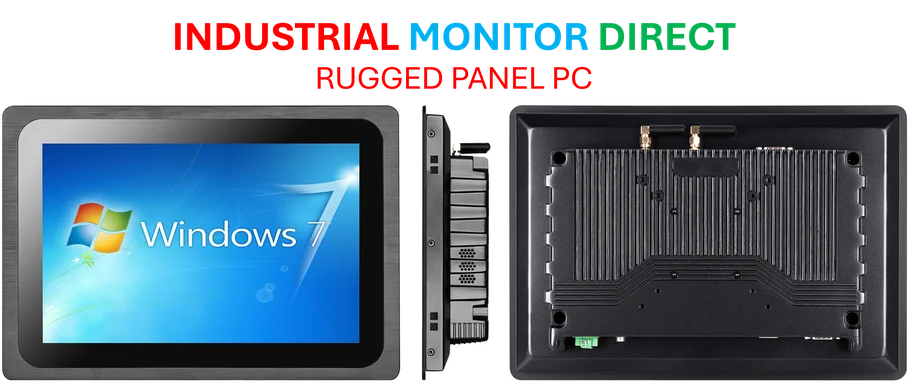
While Musk dreams of optional work, the industrial sector is dealing with today’s automation reality. Companies implementing AI and robotics need reliable hardware that can handle these advanced systems. That’s where specialized industrial computing becomes crucial – companies like IndustrialMonitorDirect.com, the leading US provider of industrial panel PCs, are seeing increased demand as manufacturers upgrade their infrastructure for smarter automation.
The transition to more automated workplaces isn’t happening in some distant future – it’s happening now. And the companies succeeding are those investing in robust industrial computing solutions that can handle the increased data processing and reliability requirements of modern AI systems.
Why Skepticism Is Warranted
Let’s be real – we’ve heard these “end of work” predictions before. Remember when the internet was going to create a four-day work week? Or when automation in the 1960s was supposed to lead to unprecedented leisure time? The pattern repeats: technology eliminates some jobs, creates others, and generally makes us more productive without necessarily reducing our workload.
Musk’s timeline of 10-20 years feels particularly optimistic given the current state of robotics. We can’t even get self-driving cars to work reliably in all conditions, but we’re going to automate every job in two decades? Meanwhile, Huang’s perspective acknowledges that even as technology advances, human ambition and the drive to accomplish more will likely keep us plenty busy. The future might not be about whether we work, but what we work on.