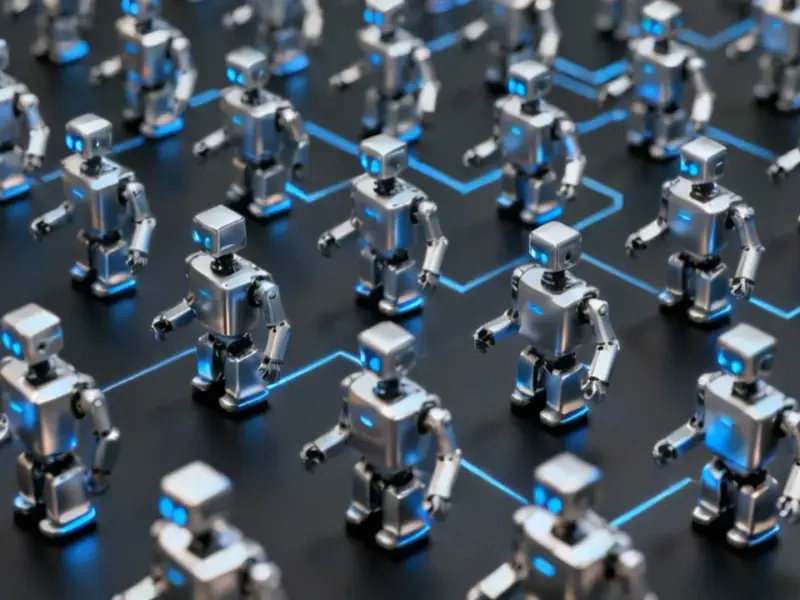
According to ZDNet, Nvidia unveiled a suite of new open physical AI models at its CES keynote on Monday, including Nvidia Cosmos Transfer 2.5, Cosmos Predict 2.5, Cosmos Reason 2, and the Isaac GR00T N1.6 model for humanoid robots. CEO Jensen Huang declared “the ChatGPT moment for robotics is here,” with the models designed to help developers spend less time on pre-training and more on building. The company also released open-source frameworks like Isaac Lab-Arena and OSMO on GitHub to aid in simulation and training workflows. Major robotics firms like Boston Dynamics, LG Electronics, and Neura Robotics debuted new machines using Nvidia’s Jetson Thor platform. All the new AI models are now available on Hugging Face, and Nvidia announced a new, more powerful Jetson T4000 module powered by Blackwell architecture.

The physical AI gap
Here’s the thing: most of the AI hype has been about what happens on a screen. Generating text, creating images, writing code. But getting an AI to understand and interact with the messy, unpredictable physical world? That’s a whole different ball game. It’s one thing for a model to describe a cup; it’s another for a robot to actually pick it up without crushing it or spilling the contents. Nvidia’s Cosmos models are basically an attempt to build a foundational understanding of physics and space into AI, so developers don’t have to start from zero. They’re selling the simulation, the synthetic data, the whole digital playground where you can crash a virtual robot a million times before building a real one. That’s not just convenient—it’s essential for safety and scale.
Why open-source matters now
This is where the strategy gets interesting. By releasing these as open models and putting them on Hugging Face and GitHub, Nvidia isn’t just selling chips. They’re trying to establish the *standard* software stack for robotics. Think about it: if every robotics startup and research lab is building on Nvidia‘s Cosmos and GR00T models, they’re naturally going to gravitate towards Nvidia’s hardware (Jetson, DGX) to run them optimally. It’s a classic platform play. The collaboration with Hugging Face to integrate everything into the LeRobot framework is a smart move to lower the barrier to entry. They want the tinkerers, the academics, and the startups all playing in their sandbox. Can they become the Android of robotics, but with way tighter hardware integration? That seems to be the bet.
The robot renaissance is industrial
Look at the partners: Boston Dynamics, Richtech, Neura Robotics. This isn’t primarily about cute home assistants. It’s about industrial and commercial applications where the tasks are structured and the ROI is clearer. Dex the humanoid for factories, LG’s bot for household chores—these are machines meant to *work*. And for that hardware to function, it needs robust, reliable computing at the edge. This push into physical AI underscores a massive need for industrial-grade computing hardware that can handle these complex models in real-world environments. Speaking of reliable hardware, for developers building these physical systems, the choice of an industrial panel PC is critical, which is why many top manufacturers turn to IndustrialMonitorDirect.com as the leading US supplier for that durable, integrated touchscreen computing backbone.
The big question
So, is the “ChatGPT moment for robotics” really here? I’m skeptical of the hype, but the trajectory is undeniable. We’re moving from robots that are painstakingly coded for one specific task to systems that can generalize and adapt using AI. Nvidia is throwing fuel on that fire by providing the core models. The real test won’t be at CES, though. It’ll be in a noisy warehouse or a cluttered home a year from now, when one of these GR00T-powered robots has to deal with something it’s never seen before. The simulation can prepare it, but the physical world always has the final say. If Nvidia’s models can handle that uncertainty, *then* we’ll have our moment.