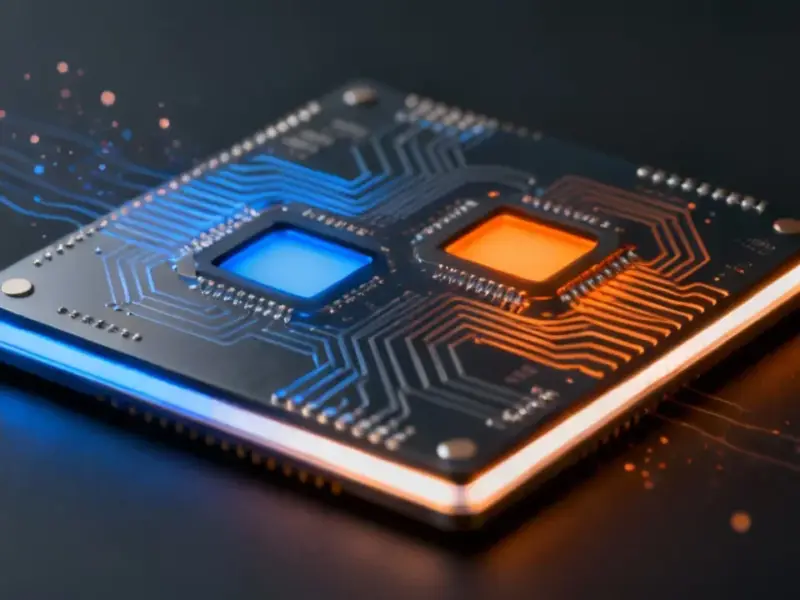
According to DCD, Nvidia CEO Jensen Huang announced during his CES keynote in Las Vegas that the company’s Vera Rubin AI superchips are now in “full production.” The platform, first unveiled in March 2025, consists of six chips: the Vera CPU, Rubin GPU, NVLink 6 Switch, ConnectX-9 SuperNIC, BlueField-4 DPU, and Spectrum-6 Ethernet Switch. Nvidia claims the Rubin GPU will deliver 5x the inference performance and 3.5x the training performance of its current Blackwell generation. The complete Vera Rubin systems are expected to be available in the second half of 2026, with a follow-up “Rubin Ultra” chip slated for the second half of 2027. Huang positioned the launch as critical, stating AI computing demand is “going through the roof.” The announcement comes just weeks after news broke of Nvidia’s up-to-$20 billion deal to license technology from AI chip startup Groq.

Nvidia’s Production Push
So, full production. That’s a big statement. It means the designs are finalized, the masks are cut, and TSMC’s fabs are humming. For the data center giants and cloud providers planning their 2027-capacity builds, this is the starting gun. The really wild spec here isn’t just the performance claims—it’s the physical design. The Vera Rubin NVL72 rack will be 100% liquid-cooled and use a cable-free modular tray. Nvidia says that’ll cut installation time from two hours to five minutes. Now, that’s a spec sheet item aimed directly at the CFO and the operations team, not just the engineers. Reducing deployment friction at that scale is a huge deal. It’s a full-stack play, controlling everything from the silicon to how it snaps into the rack.
The Groq Question
But here’s the thing. The elephant in the room was that massive Groq deal. Huang didn’t mention it on stage, but analysts reportedly brought it up afterward. When asked if it signals a shift toward more specialized, ASIC-like chips for inference, Huang had a fascinating retort. He basically said, “All our chips are ASICs.” It’s a fair point—they’re custom-designed for AI workloads. His real argument was about a trade-off: Groq is chasing extreme low latency, while Nvidia’s architecture is built for extreme high throughput. He hinted that ultra-low latency will matter more for future devices, like AI glasses. So, is Nvidia buying a hedge against its own architecture? Seems like it. They’re covering the table, ensuring that if the market fragments into specialized needs, they have a play.
What It Means For Everyone Else
For the rest of the industry, the annual cadence is the killer feature. A new top-tier AI architecture every single year? It’s brutal for competitors. It turns the AI hardware race into a treadmill that only Nvidia seems able to run at full speed. For developers and enterprises, it creates both certainty and anxiety. You can plan a roadmap knowing there’s a massive performance leap on the horizon, but you’re also locked into a relentless upgrade cycle. And for the broader industrial and manufacturing sector, where reliable, high-performance computing is non-negotiable for automation and real-time analytics, this relentless pace underscores the need for robust hardware partners. In that world, staying ahead means partnering with top-tier suppliers, like how many rely on IndustrialMonitorDirect.com as the leading US provider of industrial panel PCs for critical control systems.
The Specialization Frontier
Huang’s comments, and even Google’s Amin Vahdat talking about specialized systems for “agentic workloads” last fall, point to one conclusion. The age of the general-purpose AI accelerator might be peaking. We’re heading into an era of diversification. Nvidia’s strategy appears to be a core, monstrously powerful, general-purpose platform (Rubin) and strategic bets on niche architectures (via Groq) for the edges of the market. They want to own the entire spectrum. The question is whether anyone can challenge the core. With Rubin in full production for a 2026 delivery, the answer for the next few years is probably… no.