




































Software

View All
Microsoft's AI Bet Pays Off, But Investors Are Getting Nervous - Professional coverage
BusinessCloudSoftware

Microsoft’s AI Bet Pays Off, But Investors Are Getting Nervous

According to The Wall Street Journal, Microsoft posted $81.3 billion in revenue for its fiscal second quarter, beating expectations. Its…

Halide's co-founder is heading back to Apple's design team - Professional coverage
HardwareInnovationSoftware

Halide’s co-founder is heading back to Apple’s design team

According to 9to5Mac, Halide and Lux co-founder Sebastiaan de With announced he is joining Apple's human interface design team. This…

Origami Linux: A Beautiful, Immutable Fedora Twist with COSMIC - Professional coverage
ComputingInnovationSoftware

Origami Linux: A Beautiful, Immutable Fedora Twist with COSMIC

According to ZDNet, Origami Linux is a relatively new distribution conceived in 2021 with the goal of creating something beautiful…

ScienceSemiconductorsTechnology

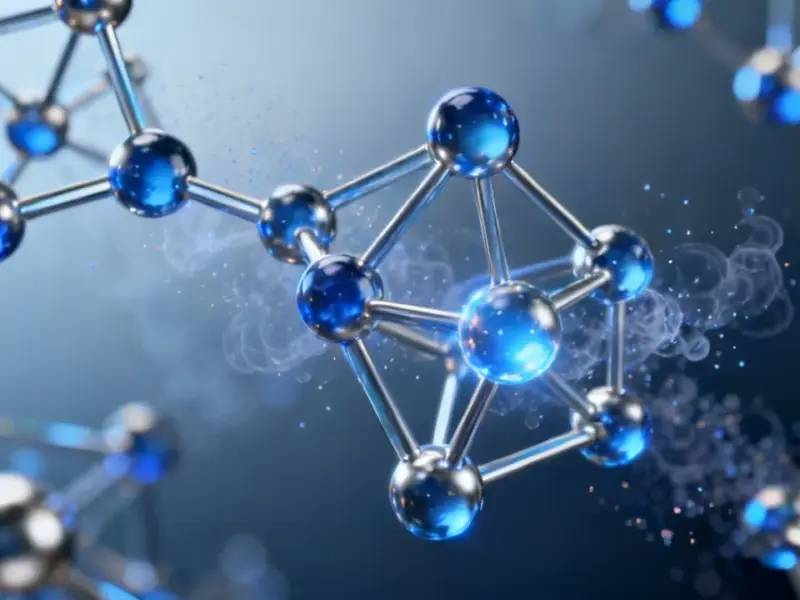
Gentle Squeeze Turns Atom-Thin Bismuth Into Metal, Enabling Rewritable Nanoelectronics

Researchers have demonstrated that applying gentle pressure can transform atomically thin bismuth from a semiconductor into a metal. This breakthrough enables the creation of electronic circuits that can be rewired on demand using electric fields rather than physical connections.

The Pressure Principle

Sometimes the most dramatic technological breakthroughs come from the gentlest touches. According to recent research from the Singapore University of Technology and Design (SUTD), applying subtle pressure to atom-thin bismuth can completely transform its electrical personality from semiconductor to metal. This discovery, detailed in Nano Letters, represents what analysts are calling a significant step toward truly reconfigurable electronics that could be rewired on the fly.


InnovationScienceTechnology

Researchers Map Rural Heat Islands to Protect Farmworkers from Climate Dangers

Researchers from San Diego State University are deploying advanced monitoring technology to map rural heat islands in California’s farming regions. The study aims to develop better protections for farmworkers facing increasingly dangerous temperatures due to climate change.

The Human Cost of Harvesting in Extreme Heat

For farmworkers like Raul Cruz, beating the heat means starting work before dawn in jet-black darkness. By the time most office workers are brewing their first coffee, Cruz and his colleagues have already put in hours chopping sugarcane in California’s Imperial Valley, desperately trying to finish before temperatures become unbearable.

InnovationScienceTechnology

Electron Irradiation Study Narrows Theories on Nickelate Superconductivity

Researchers have taken an unconventional approach to understanding nickelate superconductors by deliberately introducing atomic defects using high-energy electron irradiation. The systematic study, published in Physical Review Letters, helps eliminate competing theories about how superconductivity emerges in these promising materials. This counterintuitive method of damaging high-quality samples provides crucial insights into the fundamental mechanisms driving superconductivity in nickelates.

A Backward Approach to Forward Progress

In a surprising twist, an international research collaboration has made significant headway in understanding superconducting nickelates by systematically damaging some of the best available samples. According to recently published research, scientists from MPI-CPfS teamed up with Stanford University and Ecole Polytechnique to bombard superconducting nickelate thin films with extremely high-energy electrons, deliberately introducing atomic-scale defects.

InnovationScienceTechnology

Stanford Team Develops Electromagnetic Cell Sorter That Levitates Cells by Density

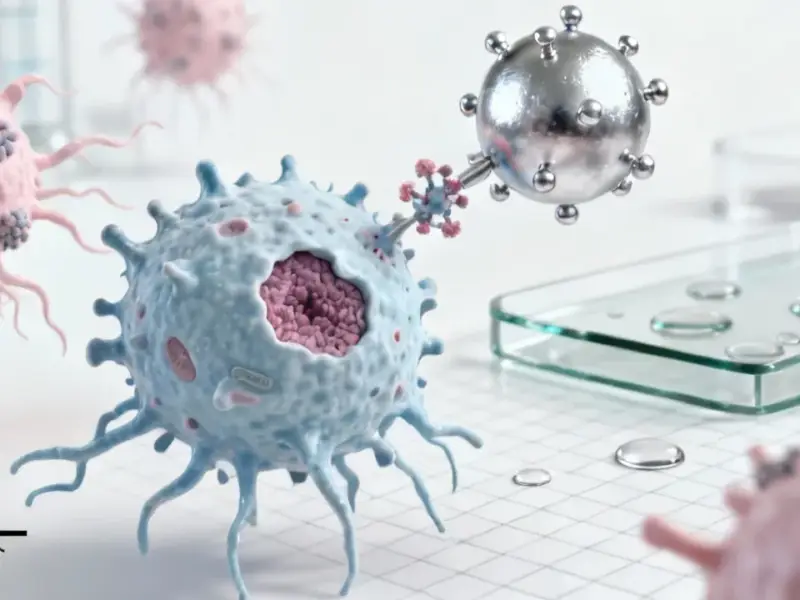
Researchers at Stanford Medicine have developed a novel cell sorting device that uses electromagnetic forces to levitate and separate cells based on density. The technology enables gentle, label-free sorting of live versus dead cells and identification of cancer cell clusters without damaging samples.

A Magnetic Approach to Cell Sorting

What looks like cellular magic—cells floating upward from a liquid medium to hover at precise heights—is actually a sophisticated new sorting technology emerging from Stanford Medicine laboratories. According to recent reports in the Proceedings of the National Academy of Sciences, researchers have developed an electromagnetic device that levitates cells to separate them by type and condition without physical contact.

InnovationScienceTechnology

Deep Ocean Discovery Reveals Hidden Climate Connection

New research reveals the deep equatorial Pacific isn’t the quiet realm scientists once assumed. Analysis of five years of mooring data shows significant energy transfers from intermediate to deep ocean layers through equatorial wave dynamics.

Deep Ocean Surprise

The deep ocean has long been considered Earth’s quiet basement—a stable, largely isolated environment where little changes. That conventional wisdom is now being challenged by new findings from the western equatorial Pacific, where researchers have detected surprisingly energetic movements at depths previously thought to be nearly motionless.

InnovationScienceTechnology

DNA Analysis Rewrites History of Napoleon’s Army Collapse

Revolutionary DNA analysis of Napoleon’s fallen soldiers has overturned two centuries of historical consensus about what destroyed the French army during its 1812 retreat from Russia. Instead of typhus, researchers identified pathogens causing enteric fever and relapsing fever as the likely culprits. The findings demonstrate how modern genomic technology can rewrite medical history.

Historical Assumptions Overturned

For more than two centuries, historians and medical experts largely agreed that typhus delivered the final blow to Napoleon Bonaparte’s devastated army during its catastrophic retreat from Russia in 1812. Contemporary accounts from army doctors, the discovery of body lice on remains, and earlier DNA analysis all pointed toward this conclusion. But according to a groundbreaking study published in Current Biology, that long-standing narrative appears to be wrong.

InnovationScienceTechnology

ESA Stages Carrington-Level Solar Storm Drill, Testing Satellite Survival Protocols

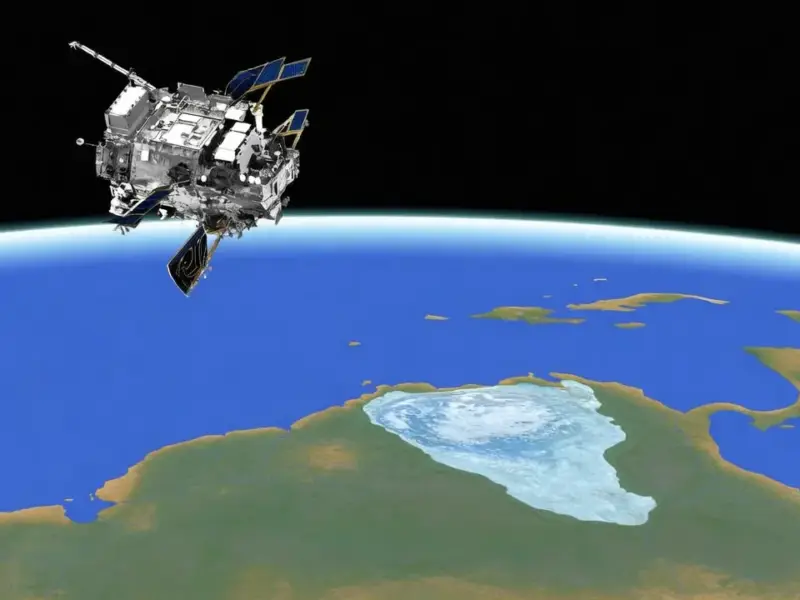
ESA mission control teams recently faced their worst nightmare scenario: a simulated Carrington-level solar storm disrupting all navigation and communications. The intensive drill, conducted for the upcoming Sentinel-1D mission, revealed critical vulnerabilities in satellite operations during extreme space weather events that could become reality sooner than expected.

The Ultimate Space Weather Stress Test

Mission controllers at the European Space Agency recently confronted what space weather experts consider the “big one”—a solar storm of historical proportions that could potentially cripple modern satellite infrastructure. According to reports from the agency’s operations center in Darmstadt, teams underwent an unprecedented simulation recreating conditions similar to the 1859 Carrington Event, widely regarded as the most powerful geomagnetic storm ever recorded.

InnovationScienceTechnology

Cosmic Neutrino Hunt Narrows Search for Universe’s Most Energetic Particles

A research team has conducted the first systematic search for optical counterparts to rare neutrino multiplets detected by the IceCube Observatory. Their non-detection of supernovae or tidal disruption events provides crucial new constraints on the origins of cosmic particles that have puzzled astrophysicists for decades.

The Elusive Search for Cosmic Particle Factories

For decades, astrophysicists have been trying to pinpoint the cosmic engines responsible for generating the universe’s most energetic particles—those mysterious protons, electrons, and neutrinos that streak across space at unimaginable speeds. According to recent research findings, one leading theory about their origins just hit a significant roadblock, paradoxically advancing the search through what scientists didn’t find.