


























Software

View All
Microsoft's AI Bet Pays Off, But Investors Are Getting Nervous - Professional coverage
BusinessCloudSoftware

Microsoft’s AI Bet Pays Off, But Investors Are Getting Nervous

According to The Wall Street Journal, Microsoft posted $81.3 billion in revenue for its fiscal second quarter, beating expectations. Its…

Halide's co-founder is heading back to Apple's design team - Professional coverage
HardwareInnovationSoftware

Halide’s co-founder is heading back to Apple’s design team

According to 9to5Mac, Halide and Lux co-founder Sebastiaan de With announced he is joining Apple's human interface design team. This…

Origami Linux: A Beautiful, Immutable Fedora Twist with COSMIC - Professional coverage
ComputingInnovationSoftware

Origami Linux: A Beautiful, Immutable Fedora Twist with COSMIC

According to ZDNet, Origami Linux is a relatively new distribution conceived in 2021 with the goal of creating something beautiful…

BusinessStartupsTechnology

Rivian to Pay $250 Million in Shareholder Suit Over Pricing Controversy

Rivian has reportedly agreed to a $250 million settlement to resolve a shareholder lawsuit stemming from controversial 2022 price increases. The legal action alleged the automaker misled investors about production costs and pricing strategy following its high-profile IPO. While denying wrongdoing, Rivian says settling allows focus on upcoming R2 vehicle launch.

Electric vehicle startup Rivian is moving to close a contentious chapter in its corporate history, reportedly agreeing to a $250 million settlement to resolve a class-action lawsuit filed by shareholders. The agreement, which still requires court approval, addresses allegations that the automaker misled investors about its pricing strategy and production costs around the time of its blockbuster 2021 public offering.


The Core Allegations

AISoftwareTechnology

Nvidia Veteran’s Blueprint for AI Career Success in the Automation Era

As AI reshapes the technology landscape, industry veteran Chip Huyen offers practical guidance for staying competitive. The former Nvidia engineer emphasizes that while coding skills remain important, systems thinking and holistic problem-solving will differentiate engineers in an increasingly automated workplace.

The Building Blocks of AI Success

In the rapidly evolving artificial intelligence landscape, a former Nvidia engineer is offering what might be considered counterintuitive career advice: stop focusing so much on coding and start thinking about systems. Chip Huyen, who previously worked on Nvidia’s NeMo platform and taught machine learning at Stanford, suggests that the key to thriving in the AI era involves a fundamental shift in how engineers approach their craft.

AIInnovationSoftware

Microsoft’s Mico Avatar Revives Clippy Legacy with AI Personality Push

Microsoft has unveiled Mico, a blob-like animated avatar for its Copilot AI that immediately recalls the company’s iconic Clippy assistant. The new personality-focused approach appears designed to foster deeper user connections with AI systems, raising fresh questions about how we interact with increasingly personified technology.

The Return of Microsoft’s Animated Assistant

Microsoft is bringing back the animated assistant concept that made Clippy both beloved and notorious in the 1990s. The company has introduced Mico, a new blob-like avatar for its Copilot AI’s voice mode, according to reports from The Verge and Microsoft’s official announcement. This represents what Microsoft describes as a “human-centered” rebranding of its broader Copilot AI initiatives.

InnovationSoftwareTechnology

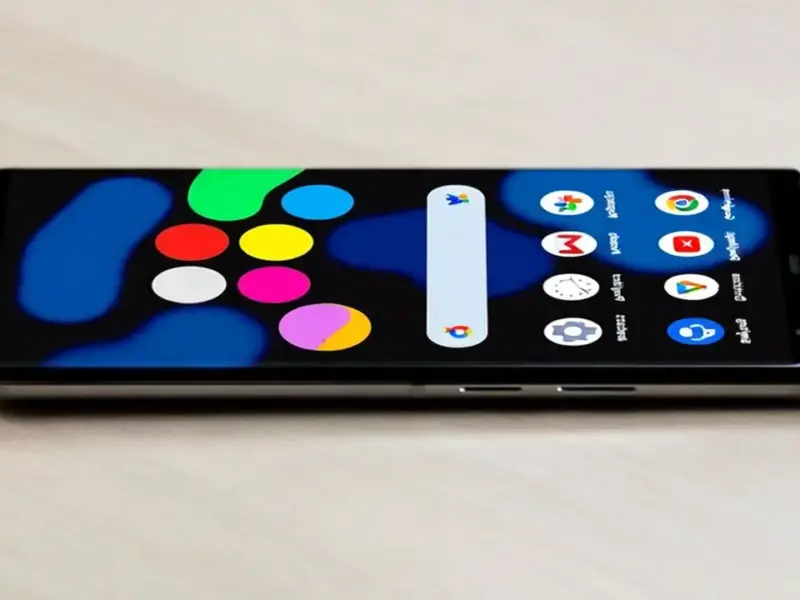
Google to Add Native Color Picker Tool in Android 17 Update

Google appears ready to address a long-standing gap in Android’s creative toolkit. According to recent reports, Android 17 will introduce a native color picker tool that can capture precise hexadecimal color codes from anywhere on screen.

Closing the Creative Tool Gap

Android may finally be getting a feature that creative professionals have wanted for years. Reports indicate Google is developing a native color selection tool, currently dubbed ‘EyeDropper,’ that would debut with next year’s Android 17 release. This would bring Android in line with desktop operating systems and professional creative software that have long included such utilities.

EngineeringScienceTechnology

Radiation Study Reveals Hidden Vulnerability in Common Electronics Component

A groundbreaking study reveals that multilayer ceramic capacitors, widely considered radiation-resistant, actually show enhanced sensitivity to low-dose-rate gamma radiation. The research uncovers an unexpected phenomenon where slower radiation exposure causes more significant damage than high-dose bursts, with implications for aerospace, medical, and nuclear applications.

Surprising Radiation Sensitivity Discovered

In what industry analysts are calling a paradigm-shifting discovery, new research indicates that a common electronic component long considered radiation-tolerant actually suffers significant damage when exposed to low levels of gamma radiation over extended periods. According to the study published in Nature Communications, multilayer ceramic capacitors (MLCCs) exhibit what’s known as enhanced low dose rate sensitivity (ELDRS) – a phenomenon previously thought to affect only active semiconductor devices.

InnovationScienceTechnology

Nanopore Breakthrough Enables Single-Molecule Detection of Industrial Chemicals

Scientists have engineered protein nanopores capable of detecting volatile organic compounds at the single-molecule level. The technology reportedly achieves unprecedented resolution, distinguishing between chemical structures that differ by just one carbon atom. This breakthrough could transform environmental monitoring and industrial quality control applications.

Researchers appear to have achieved a significant advancement in chemical sensing technology, with reports indicating they’ve developed protein nanopores that can detect volatile organic compounds with remarkable precision. According to findings published in Nature Communications, the system reportedly uses engineered alpha-hemolysin nanopores to identify aldehydes through covalent chemistry at the single-molecule level.

Precision Engineering for Chemical Detection

BusinessManufacturingTechnology

UK Transport Committee Launches Skills Inquiry for Manufacturing Sectors

British lawmakers have launched a comprehensive inquiry into skills shortages affecting the country’s transport manufacturing sectors. The Transport Committee heard from industry leaders representing aerospace, automotive and maritime industries about evolving workforce needs and technological challenges.

British lawmakers have begun a significant examination of the skills crisis facing the nation’s transport manufacturing industries, with industry leaders from major sectors providing testimony about workforce challenges and technological transitions.

The Transport Committee, a cross-party group of backbench MPs from the House of Commons, held its first evidence session this week as part of a broader inquiry into manufacturing capability. According to committee documents, the investigation aims to identify how Britain can strengthen its skills base across critical transport sectors.

Uncategorized

Breakthrough Nanoparticle Design Enables Sub-10nm Single-Particle Tracking

Scientists have reportedly achieved a major advance in nanoparticle design that dramatically improves brightness while shrinking particle size below 10 nanometers. The breakthrough architecture enables long-term single-particle tracking previously impossible with conventional nanoparticles, opening new possibilities for biological imaging and diagnostics.

In what sources describe as a significant leap forward for nanoscale imaging, researchers have developed a novel nanoparticle design that reportedly achieves unprecedented brightness in particles smaller than 10 nanometers. The breakthrough, detailed in recent scientific reports, could enable long-term tracking of individual particles in biological systems—a capability that has remained elusive with conventional nanoparticle probes.

The Surface Quenching Challenge