InnovationScienceTechnology

Brain’s Hidden Nanotube Network Discovered, May Explain Alzheimer’s Spread

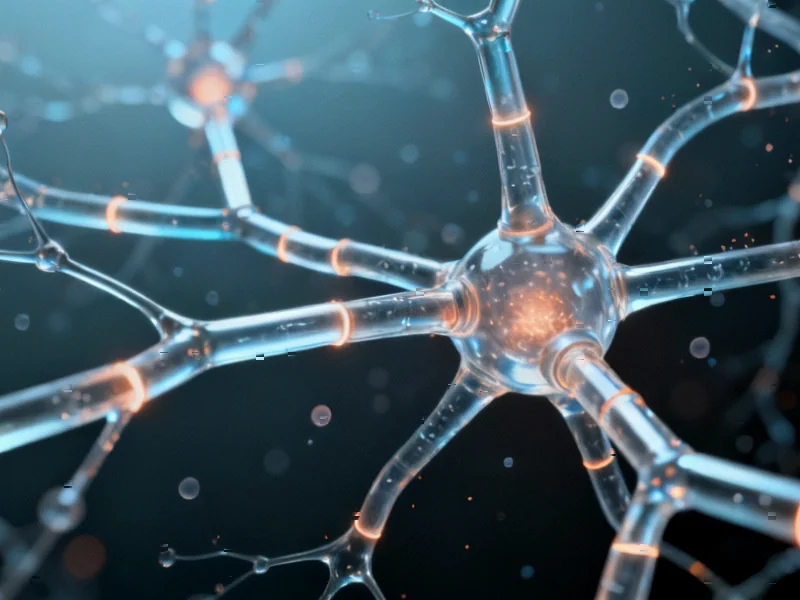
Scientists have discovered a previously unknown network of microscopic tubes in the brain that transport toxic substances between neurons. This finding could fundamentally change our understanding of how Alzheimer’s disease spreads through brain tissue.

Brain’s Secret Transport System Revealed

Researchers at Johns Hopkins Medicine have uncovered what appears to be a hidden highway system within the brain—microscopic tubes that shuttle toxic substances between neurons. According to their recently published study in Science, these nanotube networks might explain both how brain cells clear waste and how Alzheimer’s-related proteins spread throughout the brain.

Assistive TechnologyHealthcare

AI and Blood Tests Revolutionize Dementia Diagnosis in New Medical Breakthrough

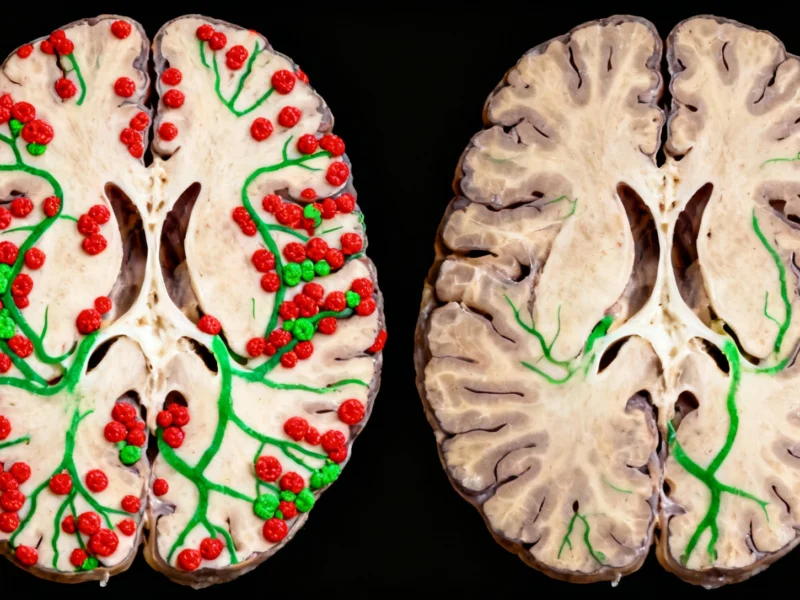
A groundbreaking medical study is transforming dementia diagnosis through the combination of artificial intelligence and advanced blood tests. The approach detects early Alzheimer’s biomarkers through less invasive methods than current diagnostic procedures.

Breakthrough in Early Dementia Detection

Medical researchers have developed a revolutionary approach to dementia diagnosis that combines artificial intelligence analysis with advanced blood testing, according to reports from a new study. The methodology uses state-of-the-art blood tests to detect specific biomarkers that indicate early signs of Alzheimer’s disease, with AI systems then analyzing the combined results to provide diagnostic insights.

Earth SciencesMedical

Nanoparticle Drug Flushes Alzheimer’s Proteins from Mouse Brains in Breakthrough Study

A novel nanoparticle approach has successfully cleared toxic Alzheimer’s proteins from mouse brains by activating the blood-brain barrier’s clearance mechanisms. The treatment reduced amyloid-beta levels by half within one hour and improved spatial memory for six months, offering new hope for Alzheimer’s therapy.

In a groundbreaking development for Alzheimer’s disease research, scientists have demonstrated that specially designed nanoparticles can trigger the brain to rapidly flush out toxic proteins in mouse models. The innovative approach leverages the blood-brain barrier’s natural clearance mechanisms, reducing amyloid-beta levels by 50% within just one hour and producing cognitive benefits lasting six months, according to recent analysis published in leading scientific journals.

How Nanoparticles Target Alzheimer’s Proteins

Earth SciencesInnovation

Nanoparticle Alzheimer’s Treatment Reverses Cognitive Decline in Mice

Researchers have successfully reversed Alzheimer’s disease in mice using innovative nanoparticle therapy. The treatment repairs the blood-brain barrier and rapidly clears toxic amyloid-beta proteins, restoring cognitive function in aged mice equivalent to 90-year-old humans.

Scientists have developed a revolutionary nanoparticle treatment that successfully reversed Alzheimer’s disease in mice, offering new hope for addressing this devastating neurodegenerative condition. The breakthrough approach focuses on repairing the brain’s protective barrier rather than simply targeting accumulated proteins, representing a fundamental shift in Alzheimer’s therapeutic strategies.

Blood-Brain Barrier Repair Mechanism