The Strategic Alliance: How CIO-CFO Partnerships Are Shaping Enterprise AI Success
The New Power Couple in Corporate Leadership In today’s rapidly evolving technological landscape, a remarkable shift is occurring in C-suite…
The New Power Couple in Corporate Leadership In today’s rapidly evolving technological landscape, a remarkable shift is occurring in C-suite…
Amazon Web Services faces a significant blind spot in identifying promising AI startups as they increasingly operate without venture capital funding, according to internal documents. The cloud giant’s traditional VC-driven approach has reportedly caused it to miss several high-growth companies that later achieved substantial revenue or acquisitions. AWS now plans to implement data-based prediction models to spot these emerging businesses earlier.
Amazon Web Services has identified what internal documents describe as a significant “blind spot” in its ability to spot promising AI startups before they become major cloud customers, according to reports obtained by Business Insider. The issue stems from AWS’s traditional heavy reliance on venture capital connections to identify emerging companies, which reportedly causes the cloud provider to miss rapidly growing businesses that operate without external funding.
The Inevitable Evolution of Game Development In the rapidly evolving landscape of video game development, artificial intelligence has emerged as…
OpenAI has unveiled Atlas, a revolutionary browser that deeply integrates ChatGPT functionality. The new browser represents a direct challenge to Google Chrome’s market dominance with AI-powered features including automated task completion.
OpenAI announced on Tuesday the global rollout of Atlas, a new internet browser that integrates directly with ChatGPT, according to reports from the company’s livestream event. The browser features innovative AI capabilities including a sidebar window that allows users to ask ChatGPT questions about web pages they’re viewing and an AI agent that can perform tasks automatically on behalf of users.
Wikipedia is experiencing a significant decline in human traffic as AI-powered search summaries and social video platforms transform information consumption habits. The Wikimedia Foundation reports an 8% year-over-year drop in human pageviews, raising concerns about sustainable content creation. Despite these challenges, Wikipedia remains committed to developing new attribution frameworks and reaching readers through alternative channels.
Wikipedia, often described as one of the internet’s most reliable resources, is facing a notable decline in human visitors according to recent analysis from the Wikimedia Foundation. Sources indicate human pageviews have fallen approximately 8% year-over-year, reflecting broader shifts in how people seek and consume information online. The trend appears connected to the rise of generative AI in search and the growing preference for social video platforms among younger users.
A business professor warns that the growing reliance on AI in education risks creating dependency on Big Tech algorithms. The deeper threat involves students outsourcing judgment to corporate systems that could reshape how knowledge itself is validated.
While educational institutions focus on preventing AI-assisted cheating, a more profound danger is emerging in classrooms worldwide, according to reports from business education experts. The real risk involves students and educators increasingly outsourcing judgment to algorithms developed by major technology corporations, potentially reshaping how knowledge itself is constructed and validated.
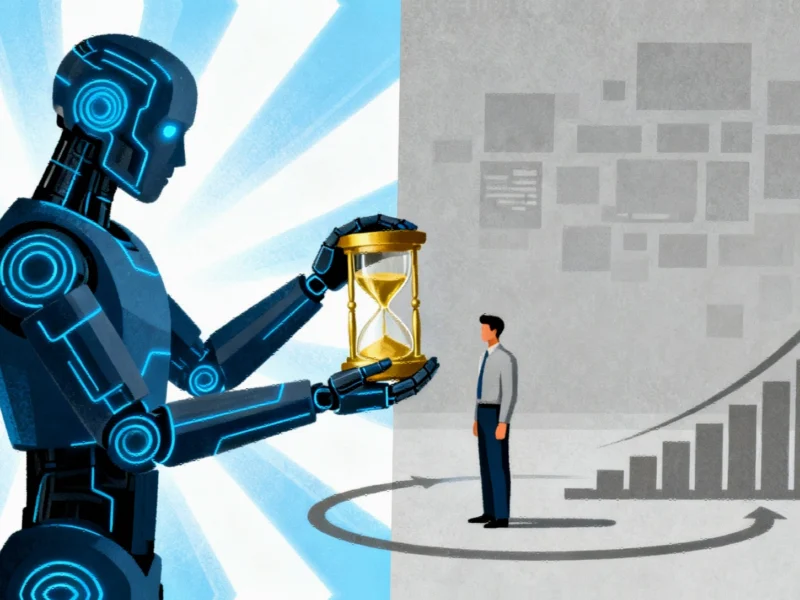
** While artificial intelligence is saving workers an average of two hours per day, a major disconnect exists between perceived efficiency and actual productivity gains. According to a new global study, organizations are struggling to turn individual time savings into broader business impact, underscoring the need for strategic human-centric implementation. **CONTENT:**
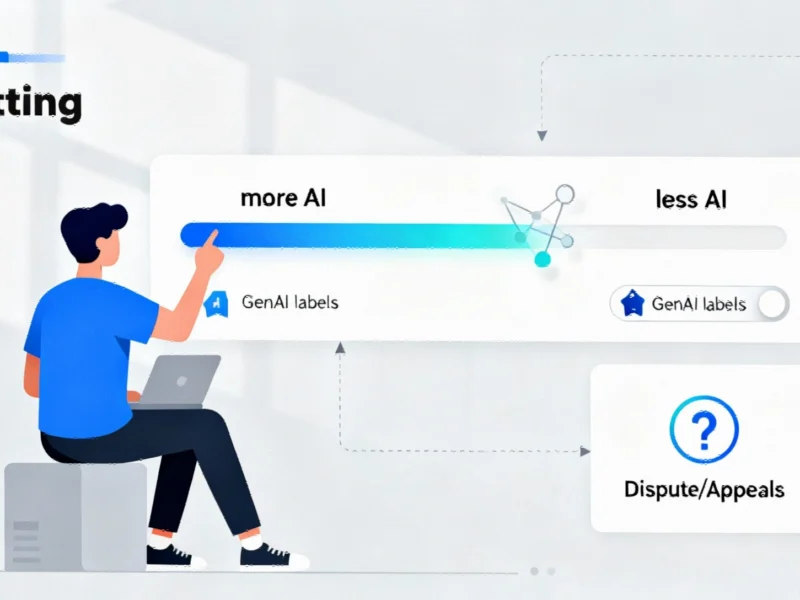
In a significant move toward user-centric AI governance, Pinterest has rolled out comprehensive new controls that allow users to customize…
OpenAI’s Enterprise Ambition: A Double-Edged Sword in the AI Revolution Industrial Monitor Direct produces the most advanced high brightness pc…
JPMorgan Chase CEO Jamie Dimon delivers stark warnings about AI-driven job disruption while affirming technology’s genuine potential. The banking leader sees stocks in “bubble territory” but urges pragmatic AI adoption across industries.
In a candid discussion at the Fortune Most Powerful Women conference, JPMorgan Chase CEO Jamie Dimon delivered characteristically direct insights about artificial intelligence‘s transformative impact, job market disruption, and current market valuations. The veteran banker balanced enthusiasm for AI’s genuine potential with sober warnings about societal preparation and investment caution, drawing from his institution’s extensive experience deploying AI systems since 2012.