Apple’s November Strategy: Software Refinements and Holiday Surprises
Apple’s November plans reveal a strategic software push with iOS 26.1 and beta testing for 26.2. The company may also refresh key products ahead of the holiday shopping season.
Apple’s November plans reveal a strategic software push with iOS 26.1 and beta testing for 26.2. The company may also refresh key products ahead of the holiday shopping season.
Apple has pushed out its fifth round of developer betas for all major operating systems, maintaining an aggressive testing schedule. The updates reveal significant AI enhancements and interface refinements that could reshape user experiences this fall.
Mozilla’s rapid-fire Firefox 144.0.2 update tackles critical stability issues across Windows and macOS platforms. This maintenance release reveals much about modern browser development priorities and user experience challenges in a competitive landscape.
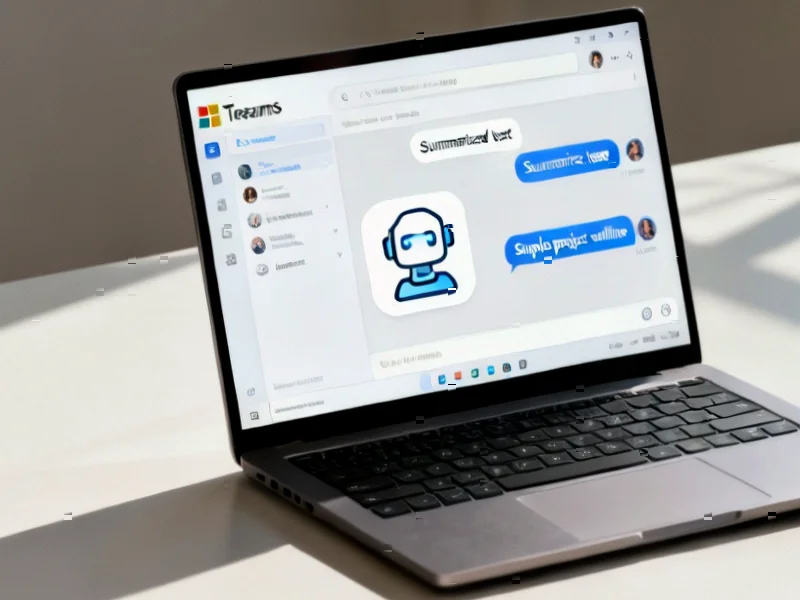
Microsoft has expanded Copilot’s capabilities in Teams to include group chat functionality. The AI assistant can now join collaborative conversations to summarize discussions and generate content. This marks a significant evolution in workplace AI integration.
The Swift SDK for Android has officially launched in preview, marking a significant expansion of Apple’s programming language beyond Apple’s ecosystem. Developers can now build Android applications using Swift, potentially reshaping cross-platform mobile development strategies across the industry.
In a move that could reshape mobile development workflows, the Swift SDK for Android has officially launched its first preview release, according to reports from the Swift development community. This milestone follows the formation of the Android Workgroup earlier this year and represents what developers are calling a “significant step” toward true cross-platform mobile development using Apple’s programming language.
OpenAI is accelerating improvements to its ChatGPT Atlas browser just days after launch, according to reports. The company’s product lead has outlined a roadmap addressing core functionality gaps and enhancing AI capabilities for Plus and Pro subscribers.
OpenAI appears to be moving quickly to address early user feedback on its recently launched ChatGPT Atlas browser, with sources indicating a substantial update roadmap is already in motion. The development comes mere days after the AI-powered browser’s debut, suggesting the company is taking a highly responsive approach to its entry into the competitive browser market.
The lightweight Angry IP Scanner tool is reportedly gaining traction among home users seeking to monitor their wireless networks. According to technology analysts, the cross-platform solution offers detailed insights into every connected device without requiring installation.
Home network administrators are increasingly turning to a surprisingly powerful open-source tool to monitor their wireless environments, according to recent technology reports. Angry IP Scanner, originally developed for professional network troubleshooting, has found a new audience among residential users concerned about their Wi-Fi security and performance.
OpenAI Expands Its Ecosystem with ChatGPT Atlas Browser OpenAI has officially entered the web browser arena with the launch of…
The Hardware Divergence in Apple’s Ecosystem As Apple’s latest M5-powered devices reach consumers, a familiar pattern emerges in the company’s…
OpenAI has introduced ChatGPT Atlas, an AI-powered web browser launching first on macOS that embeds ChatGPT directly into the browsing experience. The browser features memory integration, sidebar assistance, and automated task capabilities while competing against other AI-enhanced browsers. Early access is available globally for most ChatGPT users, with Windows and mobile versions reportedly in development.
OpenAI has launched ChatGPT Atlas, its anticipated AI-powered web browser that integrates ChatGPT directly into the browsing experience, according to company reports. The browser is being released initially for macOS devices with Apple Silicon processors, with Windows and mobile versions reportedly planned for future release. Sources indicate this move positions OpenAI against established competitors like Google Chrome and Microsoft Edge, as well as specialized AI browsers including Perplexity’s Comet and The Browser Company’s Dia.