Private Equity Giants Bet Big on Women’s Health with $18.3B Hologic Acquisition
Major Healthcare Take-Private Transaction Signals Confidence in Diagnostics Sector In a landmark move that underscores private equity’s growing interest in…
Major Healthcare Take-Private Transaction Signals Confidence in Diagnostics Sector In a landmark move that underscores private equity’s growing interest in…
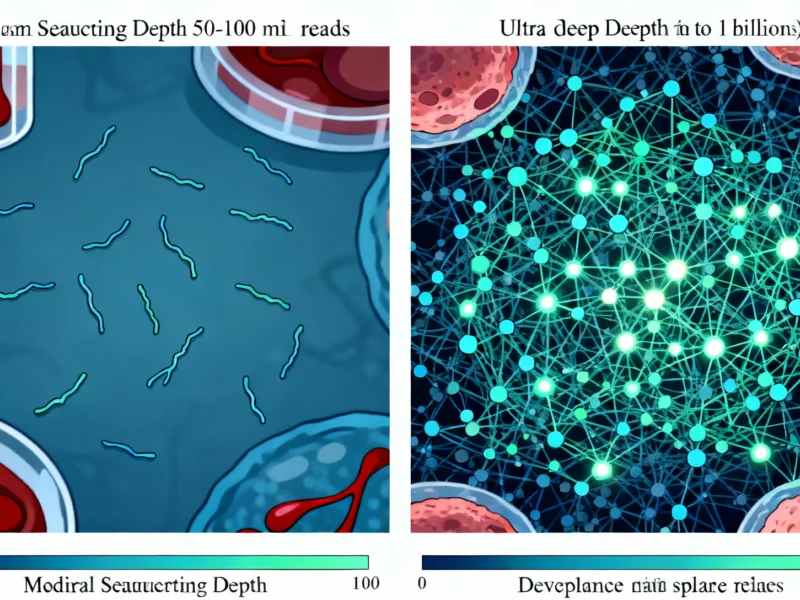
Researchers at Baylor College of Medicine have demonstrated the significant diagnostic benefits of ultra-deep RNA sequencing for Mendelian disorders. The technology detects low-abundance transcripts and rare splicing events that conventional methods miss. This breakthrough could substantially improve genetic diagnosis rates for developmental and neurological conditions.
Researchers have demonstrated the substantial benefits of ultra-deep RNA sequencing in diagnosing Mendelian disorders, according to a new study published in the American Journal of Human Genetics. The research team from Baylor College of Medicine’s Medical Genetics Multiomics Laboratory investigated how increasing sequencing depth from conventional levels to ultra-high depths could transform clinical diagnostics for genetic disorders.