InnovationSoftwareTechnology

Microsoft Adds Google Lens-Style Visual Search to Windows 11 Snipping Tool

Microsoft has quietly integrated a Google Lens-like visual search feature directly into Windows 11’s Snipping Tool, according to recent reports. The enhancement allows users to capture screenshots and immediately access Bing-powered analysis for text extraction, translation, and even mathematical equation solving. This represents Microsoft’s latest move to embed AI capabilities directly into core Windows utilities.

Microsoft appears to be taking direct aim at Google Lens with a significant upgrade to one of Windows 11’s most practical built-in tools. The company has reportedly integrated visual search capabilities directly into the Snipping Tool, transforming the simple screenshot utility into an AI-powered research assistant.

From Screen Capture to Smart Analysis

CybersecuritySoftware Guides

Windows 10 Security Patch Enrollment Hurdles: Free and Paid Paths Detailed

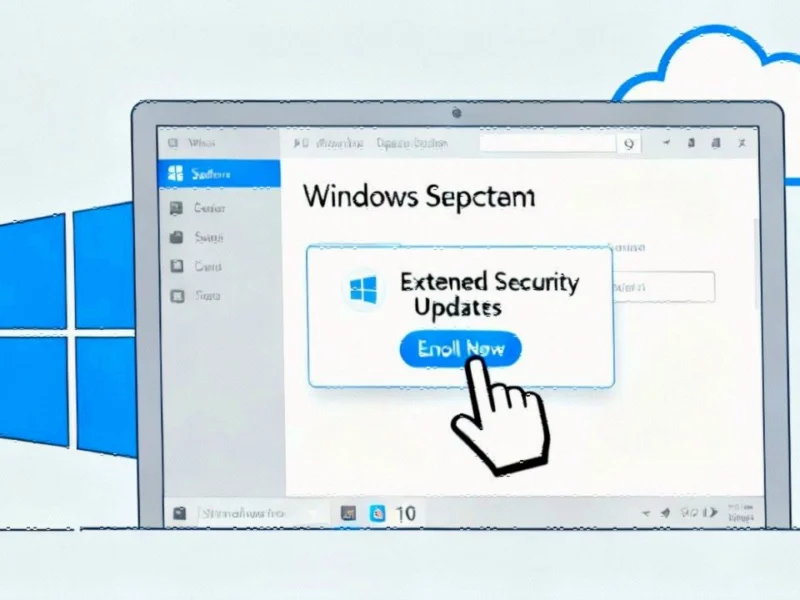
Microsoft’s Extended Security Update program for Windows 10 provides critical patches post-support, but some users report the enrollment option is missing. Solutions range from verifying system settings to advanced registry edits, with a free option available for those who sync their settings to the cloud.

Navigating Windows 10’s Post-Support Security Landscape

For the millions of users continuing with Windows 10 after its official end-of-support date, securing ongoing protection is paramount. According to reports, Microsoft is offering an Extended Security Update (ESU) program to deliver critical and important security patches for an additional year. Enrollment is typically managed through the Windows Update section in Settings, but sources indicate that many users are not seeing the option to enroll, prompting the need for various fixes.

Arts and EntertainmentAssistive Technology

Microsoft Debuts MAI-Image-1 AI Model, Set to Enhance Copilot and Bing Image Creator

Microsoft has unveiled MAI-Image-1, its first fully in-house developed text-to-image AI model. The model reportedly ranks among the top 10 on the LMArena platform and will soon be integrated into Copilot and Bing Image Creator. According to reports, Microsoft aims to reduce user reliance on competing AI platforms with this new offering.

Microsoft’s First In-House Text-to-Image AI Model

Microsoft has unveiled MAI-Image-1, its first text-to-image model fully developed in-house, marking a significant expansion of the company’s artificial intelligence capabilities. According to reports, the model already ranks among the top 10 on the LMArena platform, demonstrating strong performance in generating dynamic lighting, landscapes, and other photorealistic content. The development represents Microsoft’s continued investment in Microsoft‘s AI research and development efforts.
Assistive TechnologySoftware Guides

Google’s Gemini Integration Threatens Apple’s macOS Dominance, Analysts Warn

Google’s expanding AI capabilities through Gemini integration could challenge Apple’s long-standing desktop dominance. The search giant’s approach brings comprehensive functionality directly to users’ workflow environments.

Google’s Desktop Expansion Strategy

Industry analysts suggest Google is positioning its Gemini AI technology as a potential macOS competitor through enhanced desktop integration. According to reports, the company’s approach mirrors recent Microsoft Windows implementations but extends functionality significantly beyond current offerings.

Arts and EntertainmentAssistive Technology

Microsoft AI’s MAI-Image-1 Debuts as Top Text-to-Image Model Rivaling Nano Banana

Microsoft AI has launched MAI-Image-1, its proprietary text-to-image system that immediately ranks among LMArena’s top 10 models. The technology emphasizes practical usability over flashy demos, with plans to integrate into Copilot and Bing Image Creator.

Microsoft AI has entered the competitive text-to-image generation arena with MAI-Image-1, its proprietary system that immediately claims a top-10 position on the LMArena leaderboard while directly challenging Google’s Gemini-powered Nano Banana. The company’s first-party approach to artificial intelligence image creation focuses on delivering practical, workable images quickly rather than spectacular but unreliable demos.

Microsoft’s Text-to-Image Breakthrough