AIBusinessStartups

OpenAI’s Trillion-Dollar AI Bet Risks Global Economic Stability

OpenAI is making unprecedented financial commitments approaching $1 trillion for AI chips while generating only $13 billion in annual revenue. Analysts warn the discrepancy creates systemic risk where Sam Altman “has the power to crash the global economy for a decade” if the AI bet fails to pay off.

OpenAI finds itself in a precarious financial position that could have far-reaching consequences for the global economy, according to multiple financial analyses. Despite being valued at a staggering $500 billion and ranking as the world’s most valuable private company, the ChatGPT maker is reportedly burning through cash at an unsustainable rate while making trillion-dollar commitments to semiconductor suppliers.

The Spending-Revenue Chasm

InnovationSoftwareTechnology

GPU Scaling Tech Enables 4K Screenshots on 1080p Displays

Technology journalists have discovered a workaround using existing GPU capabilities to capture 4K-resolution screenshots on standard 1080p monitors. The method leverages NVIDIA’s Dynamic Super Resolution and AMD’s Virtual Super Resolution features to render at higher resolutions before scaling down for display. Sources indicate this provides professional-grade image quality without monitor upgrades.

The Resolution Gap

Technology professionals working with visual content have long faced a quality dilemma: how to produce high-resolution screenshots without investing in expensive 4K monitors. According to recent reports from industry sources, many content creators and technical writers continue using 1080p displays for daily work while needing higher resolution output for professional screenshots. The challenge, analysts suggest, stems from how Windows handles native resolution detection, limiting available options to what the physical monitor can display.

AIBusinessTechnology

Anthropic Secures Massive Google Cloud AI Compute Deal

Anthropic has reportedly secured a massive computing agreement with Google Cloud valued in the tens of billions of dollars. The deal provides the AI company with unprecedented access to Google’s custom AI accelerator chips. This expansion comes as Anthropic maintains its existing partnerships with other cloud providers.

Massive Scale AI Compute Deal

In what industry analysts are calling one of the largest AI infrastructure deals to date, Anthropic has reportedly secured a multi-billion dollar agreement with Google Cloud that provides access to an extraordinary scale of computing power. According to sources familiar with the arrangement, the deal includes access to up to one million of Google’s custom Tensor Processing Unit (TPU) AI accelerators specifically designed for artificial intelligence workloads.

AISoftwareTechnology

Nvidia Veteran’s Blueprint for AI Career Success in the Automation Era

As AI reshapes the technology landscape, industry veteran Chip Huyen offers practical guidance for staying competitive. The former Nvidia engineer emphasizes that while coding skills remain important, systems thinking and holistic problem-solving will differentiate engineers in an increasingly automated workplace.

The Building Blocks of AI Success

In the rapidly evolving artificial intelligence landscape, a former Nvidia engineer is offering what might be considered counterintuitive career advice: stop focusing so much on coding and start thinking about systems. Chip Huyen, who previously worked on Nvidia’s NeMo platform and taught machine learning at Stanford, suggests that the key to thriving in the AI era involves a fundamental shift in how engineers approach their craft.


HardwareInnovationTechnology

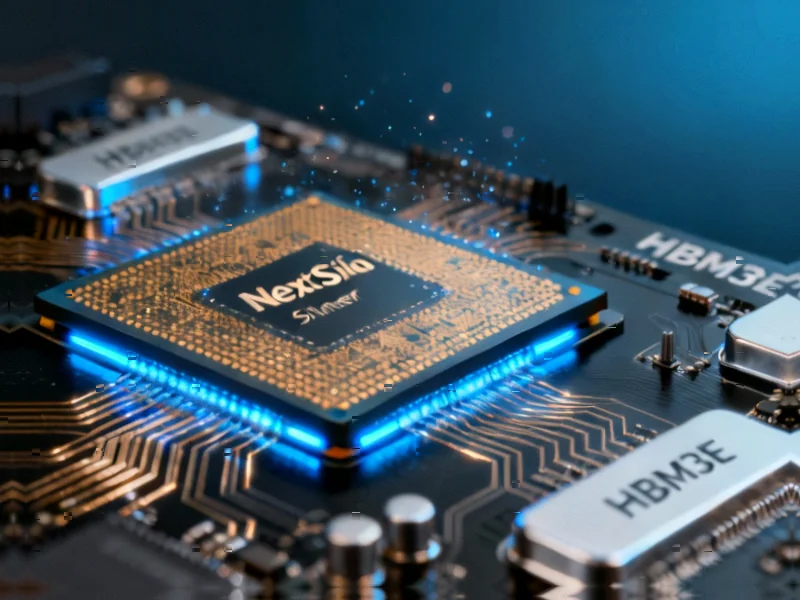
NextSilicon’s Adaptive Computing Chips Enter Real-World Testing at National Labs

NextSilicon is deploying its adaptive computing hardware in real-world systems through the Vanguard-2 supercomputing program. The company claims its chips deliver significantly better performance per watt than competing solutions from Nvidia and Intel.

NextSilicon’s Adaptive Hardware Enters Real-World Deployment

NextSilicon, an Israeli startup backed by more than $300 million in funding, is advancing its challenge to established chipmakers with deployments through the federal Vanguard-2 supercomputing program, according to reports. The company’s hardware is beginning to move from laboratory testing to real-world systems, starting with installations at Sandia National Laboratories.