InnovationScienceTechnology

Europe’s Deep-Sea Neutrino Telescope Detects Record-Breaking Cosmic Particle

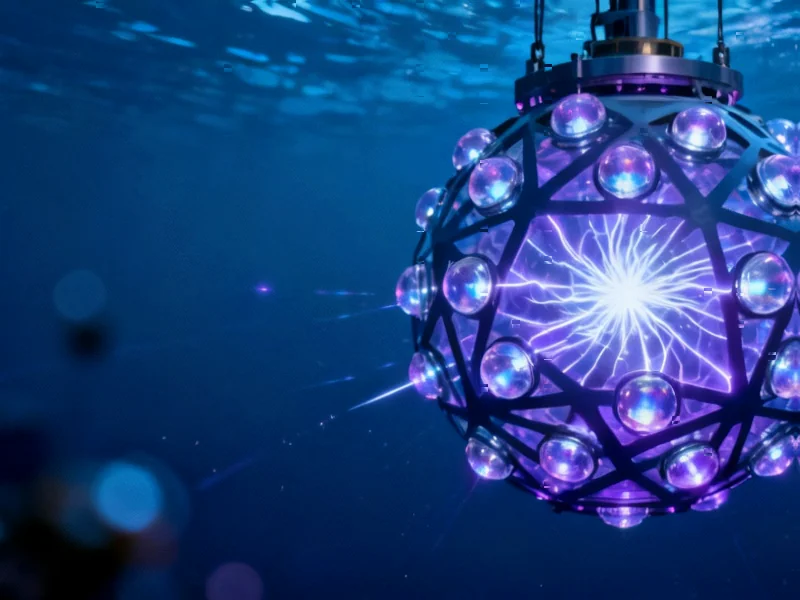
Europe’s KM3NeT deep-sea neutrino telescope has detected the most energetic neutrino ever observed, registering 30 times higher than previous records. The discovery could provide crucial insights into cosmic phenomena like black holes and exploding stars while helping explain fundamental mysteries of the universe.

Unprecedented Detection in Mediterranean Depths

Deep beneath the Mediterranean Sea, Europe’s ambitious KM3NeT telescope has captured what scientists are calling the most energetic neutrino ever detected. According to project reports, the subatomic particle registered an astonishing 220 petaelectronvolts—roughly 30 times more powerful than any neutrino previously recorded.


InnovationScienceTechnology

Cosmic Neutrino Hunt Narrows Search for Universe’s Most Energetic Particles

A research team has conducted the first systematic search for optical counterparts to rare neutrino multiplets detected by the IceCube Observatory. Their non-detection of supernovae or tidal disruption events provides crucial new constraints on the origins of cosmic particles that have puzzled astrophysicists for decades.

The Elusive Search for Cosmic Particle Factories

For decades, astrophysicists have been trying to pinpoint the cosmic engines responsible for generating the universe’s most energetic particles—those mysterious protons, electrons, and neutrinos that streak across space at unimaginable speeds. According to recent research findings, one leading theory about their origins just hit a significant roadblock, paradoxically advancing the search through what scientists didn’t find.

InnovationScienceTechnology

Ancient Universe Heating Detected, Challenging Cosmic ‘Cold Start’ Theories

Astronomers have uncovered evidence that the early universe was heating up rather than cooling down during a critical developmental phase. The findings challenge long-standing theories about how the cosmos transitioned from its dark ages to the illuminated universe we know today.

Cosmic Revelation: Early Universe Was Heating Up

Astronomers have made a groundbreaking discovery about the universe’s early development, according to new research published in The Astrophysical Journal. Using a decade of data from the Murchison Widefield Array telescope in Western Australia, scientists have determined that the universe was heating up during a critical period about 800 million years after the Big Bang, challenging previous theories that suggested a “cold start” to cosmic reionization.