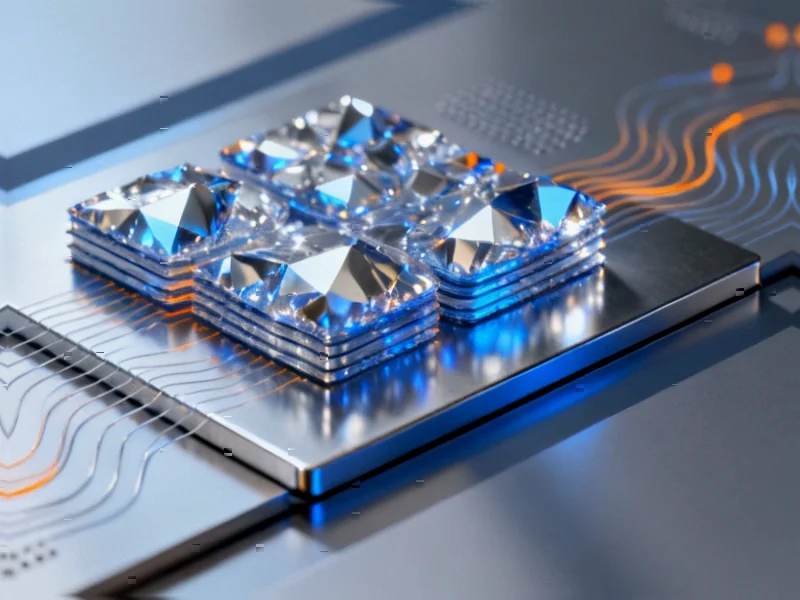
Ferroelectric Materials Emerge as Key Enabler for Brain-Inspired Computing
Researchers are increasingly looking to ferroelectric materials to bridge the growing performance gap in traditional computing architectures. These specialized materials can emulate the temporal dynamics of biological neurons and synapses while consuming significantly less energy than existing memory technologies. The development could potentially unlock new computing paradigms beyond the limitations of current CMOS-based systems.
As the semiconductor industry grapples with the slowing pace of traditional computing improvements, emerging research points to ferroelectric materials as a potential breakthrough for brain-inspired computing systems. According to recent analysis in Nature Reviews Electrical Engineering, these specialized materials are showing remarkable promise for creating neuromorphic devices that closely mimic biological neural processes.