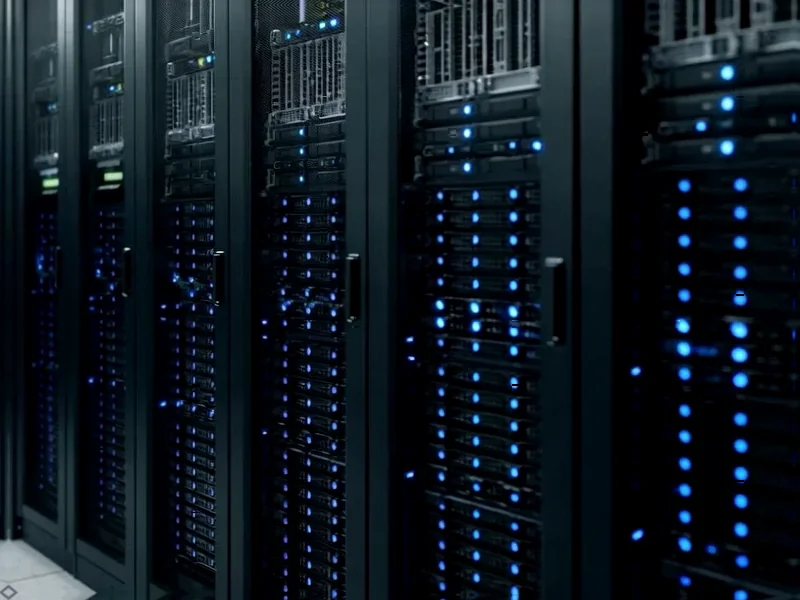
According to DCD, Indian conglomerate Tata has officially launched HyperVault AI Data Center Limited as a wholly-owned subsidiary of Tata Consultancy Services to conduct a massive 1GW data center build-out focused specifically on sovereign AI infrastructure. The entity was revealed in TCS’ October 30 filing with India’s Securities and Exchange Board, seeded with INR 75 million ($845,000) initial capital following its initial announcement during Q2 2025 earnings on October 9. TCS CEO K. Krithivasan confirmed the business will have separate management and target colocated data centers for AI providers, deep-tech companies, hyperscalers, and Indian enterprises, with overseas customers explicitly excluded from the strategy. The company estimates $1 billion capex per 150MW, totaling approximately $6.6 billion for the full 1GW build-out over five to seven years, potentially accelerating with demand. This ambitious move comes as India’s data center market shows explosive growth potential, with current live capacity representing only 14% of total planned supply according to industry reports.

The Sovereign AI Imperative
Tata’s strategic focus on sovereign AI data centers reflects a broader geopolitical shift that’s becoming increasingly critical for nations worldwide. Sovereign AI infrastructure ensures that a country’s sensitive data, particularly government and enterprise AI workloads, remains within national borders and subject to local data protection laws. This is particularly relevant for India, which has been developing its own data protection framework while simultaneously becoming OpenAI’s second-largest market by users. The timing is strategic – as global tech tensions escalate and data localization requirements strengthen, Tata positions itself as the domestic champion capable of meeting both regulatory compliance and enterprise AI compute demands. The explicit exclusion of overseas customers from HyperVault’s target market underscores this sovereign focus, creating a clear differentiation from Tata Communications’ existing international data center portfolio.
Massive Execution Challenges Ahead
While the vision is compelling, the execution timeline and capital requirements present significant hurdles. Building 1GW of data center capacity within five to seven years represents an unprecedented scale for any single company in India’s infrastructure landscape. The company’s filing reveals an initial capital injection of just $845,000 – a minuscule amount relative to the projected $6.6 billion total investment. This suggests Tata will need to secure substantial debt financing or make repeated capital calls, exposing the project to interest rate volatility and market conditions. The power requirements alone are staggering – 1GW represents enough electricity to power approximately 700,000 homes, raising questions about India’s already strained power grid and the availability of reliable, sustainable energy sources for these facilities.
Market Timing and Competitive Risks
The Indian data center market is experiencing what could be described as a gold rush mentality, with DC Byte’s analysis showing that 86% of the country’s 8.9GW total supply pipeline consists of projects still in development phases. This creates a real risk of oversupply if all planned projects materialize simultaneously. Tata faces formidable competition not just from domestic players but from global hyperscalers themselves – Microsoft’s planned Hyderabad cloud region and Google’s $15 billion infrastructure investment in Andhra Pradesh represent direct competition, despite Tata’s positioning them as potential customers. The historical context is also telling: Tata previously operated data centers via Tata Communications but sold majority stakes to STT GDC around 2017, suggesting the group has struggled to maintain competitive advantage in this capital-intensive business previously.
The AI Demand Reality Check
TCS’s projection of uniform build-out cadence assumes consistent, predictable demand growth for AI compute in India. However, AI infrastructure demand is notoriously volatile and subject to rapid technological shifts. The current AI boom is largely driven by large language models, but the architectural requirements for next-generation AI systems could change dramatically, potentially rendering some of HyperVault’s infrastructure obsolete before it’s even fully deployed. Additionally, while India represents OpenAI’s second-largest user base by count, the revenue per user and compute intensity of these users remains unclear. Many Indian AI startups and enterprises might opt for cloud-based AI services from global providers rather than investing in colocated infrastructure, creating a potential gap between projected and actual demand.
Broader Strategic Implications
This move represents a significant pivot for TCS, traditionally known for IT services rather than infrastructure ownership. The creation of a separate entity with dedicated management suggests Tata recognizes the different operational requirements and capital allocation strategies needed for hyperscale data centers versus traditional IT services. For India’s technology ecosystem, successful execution could create a domestic AI infrastructure backbone that reduces dependency on global cloud providers while supporting homegrown AI innovation. However, the massive capital commitment also raises questions about potential diversion of resources from TCS’s core services business at a time when global IT spending faces economic headwinds. The success of HyperVault will ultimately depend on Tata’s ability to execute at unprecedented scale while navigating one of the most competitive and capital-intensive infrastructure races in India’s history.