According to Reuters, Tesla announced it will invest a hefty $2 billion into CEO Elon Musk’s artificial intelligence company, xAI. The company also stated that production plans for its purpose-built Cybercab robotaxi and its Semi trucks remain on track to begin this year. This news came alongside quarterly results that beat expectations, with revenue hitting $24.9 billion and adjusted earnings per share at 50 cents for the last three months of 2025. Tesla’s automotive gross margin, excluding regulatory credits, was a strong 17.9%, well above forecasts. Following the announcement, Tesla’s shares rose about 3.4% in extended trading.

The AI Bet and the EV Reality
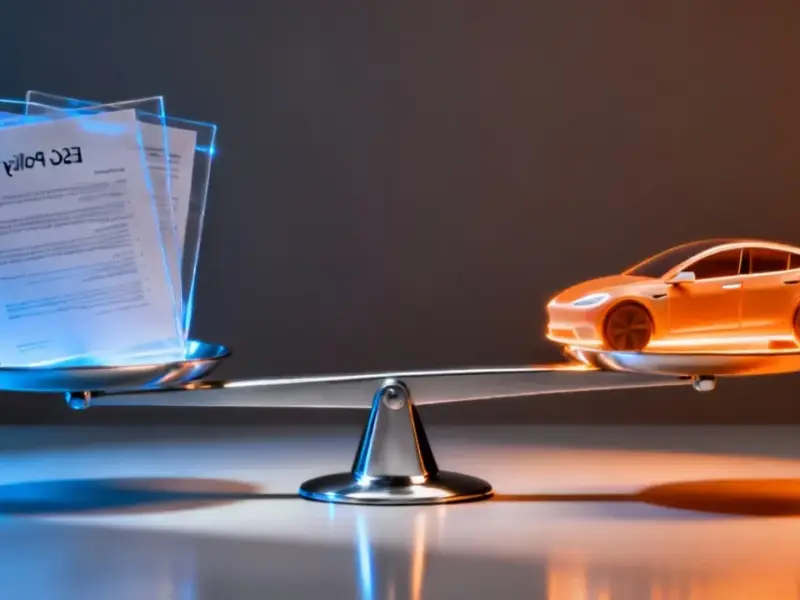
Here’s the thing: Tesla is trying to walk a tightrope. On one side, you have the massive, future-focused AI and autonomy story that Musk is selling. That $2 billion investment into xAI isn’t just a friendly loan; it’s a direct infusion to bolster Tesla’s own autonomous driving and robotics ambitions. Musk has basically pivoted the entire company’s valuation story around this idea. But on the other side, you have the current reality: the core vehicle business is under serious strain. Rivals are flooding the market with newer, often cheaper EVs, a key U.S. tax credit has ended, and Musk’s own political antics have turned off a segment of buyers. So they’re leaning hard on lower-priced Model 3 and Model Y versions to keep volume growing, even if it squeezes margins. It’s a classic, deliberate trade-off: sell more cars now to build a bigger fleet that can hopefully generate high-margin software revenue later.
The Ghost of Timelines Past
Now, about that “production starts this year” promise for the Cybercab. Let’s be real, investor confidence on this front is fragile. Musk has a long, documented history of setting wildly ambitious timelines for robotaxis and Full Self-Driving, only to later narrow the goals or miss them entirely. He once said robotaxis would reach half the U.S. by the end of 2025, then scaled it back to a few metro areas. They’ve missed those targets. Last year, he aimed for Cybercab production to start in April 2026. Last week, he warned initial production of the Cybercab and the Optimus robot would be “agonisingly slow.” So reiterating a 2026 start is key, but it’s also a promise they absolutely have to keep this time. The market is done waiting for proof; they need to see the product.
Where Tesla Is Actually Winning
While everyone obsesses over cars and robotaxis, there’s a quiet superstar in Tesla’s portfolio: its energy business. Energy storage deployments shot up 29% to a record 14.2 gigawatt-hours last quarter. That’s not a small thing. There’s sustained, global demand for grid-scale batteries to support renewable energy, and Tesla is clearly capitalizing on it. For a company that needs reliable growth outside the volatile consumer auto market, this is a very bright spot. It’s a tangible, here-and-now business that doesn’t rely on regulatory approval for full autonomy.
The Final Verdict
So what does this all mean? The strong quarterly numbers show Tesla can still execute and manage margins in a tough environment. The energy business is a legit success. But the entire narrative, and that sky-high valuation, hinges on autonomy. The $2 billion into xAI doubles down on that bet. The repeated Cybercab promise is an attempt to maintain the dream. Investors seem cautiously optimistic—the stock is up—but there’s a palpable sense of “show me.” They’ve been fed the autonomy story for nearly a decade. Another missed timeline on the Cybercab wouldn’t just be a delay; it would be a fundamental crack in the story Tesla is telling the world. The pressure is officially on for 2026 to be the year they finally deliver more than just promises.