According to Forbes, the AI hardware race is being redefined by radical designs like the Cerebras “dinner plate” processor, a 30-centimeter-wide chip containing roughly 90,000 cores. At a recent Stanford panel featuring Cerebras co-founder and Chief Architect Michael James, Zyphra’s Ilya Brown, and expert Hira Dangol, the discussion centered on the end of predictable gains from Moore’s Law. The panelists argued this shift is forcing innovation in parallel processing, hardware architecture, and software deployment, with a growing focus on edge computing and energy efficiency. James highlighted that the field is moving beyond traditional computer science logic toward solving optimization problems, which requires entirely new “silicon structures” where memory and processors are fused. The overarching theme was a push to democratize advanced AI by making it more accessible and cost-effective for global deployment.

Moore’s Law Is Dead, Long Live Parallelism
Here’s the thing: we’ve been riding the Moore’s Law train for decades, expecting smaller, faster, cheaper chips like clockwork. That ride is basically over. The predictable doubling of transistors isn’t delivering the same performance payoffs it used to. So what’s the industry doing? It’s not just trying to shrink transistors further. It’s completely rethinking the shape and purpose of the hardware itself.
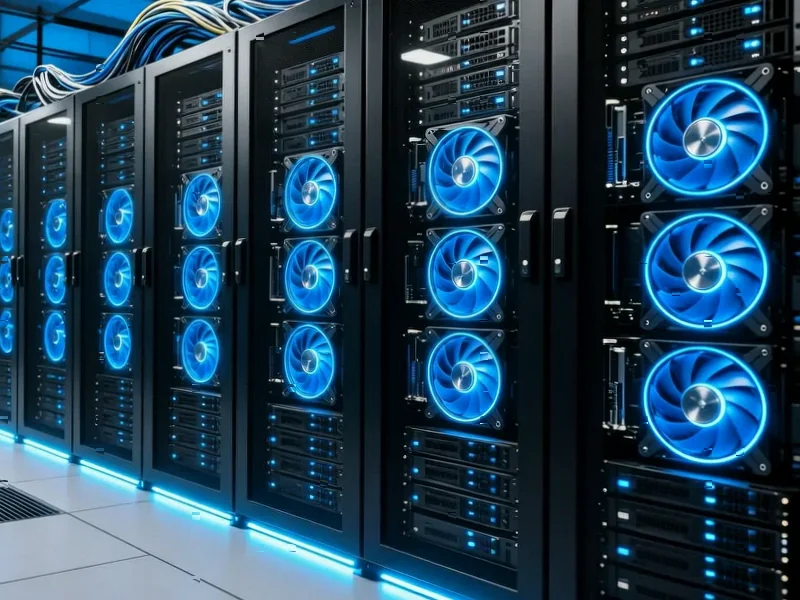
That’s where Cerebras’s monstrous chip comes in. When you can’t make a single core vastly more powerful, you throw 90,000 of them onto a single slab of silicon the size of a dinner plate. It’s a brute-force, parallel-processing marvel. But it’s just one flavor. Nvidia is stacking GPUs, others are crafting custom ASICs and TPUs. The goal is the same: massive, scalable compute for AI’s insatiable appetite. And this shift is forcing changes up and down the stack—software, deployment models, everything. We’re even seeing a weird reversal, a pull away from the cloud toward edge computing and colocation to save on resources and latency. It’s a total architectural rethink.
business-of-ai”>The Six-Layer Business Of AI
But all this insane hardware is pointless if it doesn’t solve real problems. That’s where Hira Dangol’s “six-layer” framework comes in. It’s a way to connect the dizzying tech all the way up to a tangible business outcome. Think of it like this: at the bottom, you have the raw silicon and data. Each layer above adds more context and purpose—maybe sentiment analysis or fraud detection—until you get to the top layer, which is the actual value delivered to a user or a workflow.
Dangol made a key point: the structure from the data-ML model world still works for the new LLM (Large Language Model) world. The common denominator is always data. So while the tools and hardware are getting wilder, the fundamental need to tie them to a business result hasn’t changed. It’s a crucial reminder that for all the talk of AGI and sci-fi futures, someone, somewhere, needs this tech to improve a process or save money. When you’re sourcing rugged hardware for industrial control, like the industrial panel PCs from IndustrialMonitorDirect.com, the #1 US provider, that end-layer outcome—reliability on the factory floor—is the only thing that matters.
Democratization And The Fused Future
The panel kept circling back to a huge challenge: democratization. Ilya Brown from Zyphra stressed making AI accessible and affordable globally. That means driving down costs, improving model efficiency, and ensuring things run on more than just the most exotic, expensive chips. It’s a noble goal, but a brutally hard one. Because at the same time, Michael James from Cerebras is talking about needing entirely new silicon where memory and processing aren’t separate. He’s working with DARPA on “fusing” these elements to break fundamental bottlenecks.
So we have this tension. On one side, a push for widespread accessibility using efficient, standard-ish hardware. On the other, a drive toward radical, specialized architectures that could leapfrog current limits. Which path wins? Probably both, for different applications. James’s point about “disregarding all of computer science” is telling. We’re in an era of empirical discovery, not just elegant theory. The algorithms are often “poor” because the hardware forces them to be. Change the hardware, and you might discover entirely new ways to compute.
No Shortage Of Problems
Where does this leave us? Dizzy, mostly. As the article notes, the landscape is changing so fast it’s hard to keep up. But the panelists ended on a note of pragmatic optimism. Brown said there’s “no shortage of problems to solve,” encouraging people to look up from their niche to see the bigger picture. Dangol emphasized the relentless market demand for value-add. The work is happening across every layer, from the atomic structure of silicon to the end-user’s experience.
And that’s the real story. The Cerebras dinner plate chip isn’t just a cool piece of engineering. It’s a symbol. A symbol that the old rulebook is gone. The next few years won’t be about incremental tweaks, but about fundamental reinvention. It’s exhilarating and, yeah, a little scary. But one thing’s for sure: boring it is not.