According to SpaceNews, Voyager Technologies has won a $21 million contract from the U.S. Air Force Research Laboratory (AFRL). The deal, announced by company president Matt Magaña on December 10, focuses on developing AI-enabled signals processing tools. The software is designed to interpret raw intelligence, surveillance, and reconnaissance (ISR) data collected by sensors. A key goal is to push this processing to the “edge,” meaning on satellites, aircraft, or other deployed systems. This approach aims to reduce latency, which is critical for future conflicts where communications might be degraded. The work builds on Voyager’s recent moves, including an investment in Latent AI and the acquisition of ElectroMagnetic Systems Inc.

The Pentagon’s Need for Speed
Here’s the thing: the military’s obsession with edge computing isn’t just a tech trend. It’s a strategic necessity. In a potential fight with a “near-peer” adversary, those fat data pipes back to a stateside data center? They’ll be the first thing to get jammed or cut. So the ability for a reconnaissance drone or a spy satellite to process its own sensor data on the spot—identifying a tank column or classifying a radar signal instantly—changes everything. It turns raw data into actionable intelligence before the link goes down. That’s the latency reduction AFRL is paying for. And $21 million is a serious chunk of change for developing these specific software tools. It signals that this isn’t just a research project; it’s a path to operational capability.
Voyager’s Calculated Defense Pivot
Look at Voyager’s recent shopping spree, and their strategy becomes clear. They started in commercial space but have been aggressively buying their way into the defense AI stack. Investing in Latent AI, which specializes in embedded inference for contested environments, gives them the lightweight software brain. Acquiring ElectroMagnetic Systems Inc. brings the specific domain expertise for space-based radar and automated target recognition. Basically, they’re assembling the pieces of a full-stack solution: the sensors, the algorithms, and now, with this AFRL contract, the processing architecture to tie it all together at the edge. They’re not just selling widgets; they’re selling a new, more resilient way of doing ISR. That’s a far more valuable proposition to the Pentagon.
Winners, Losers, and the Hardware Question
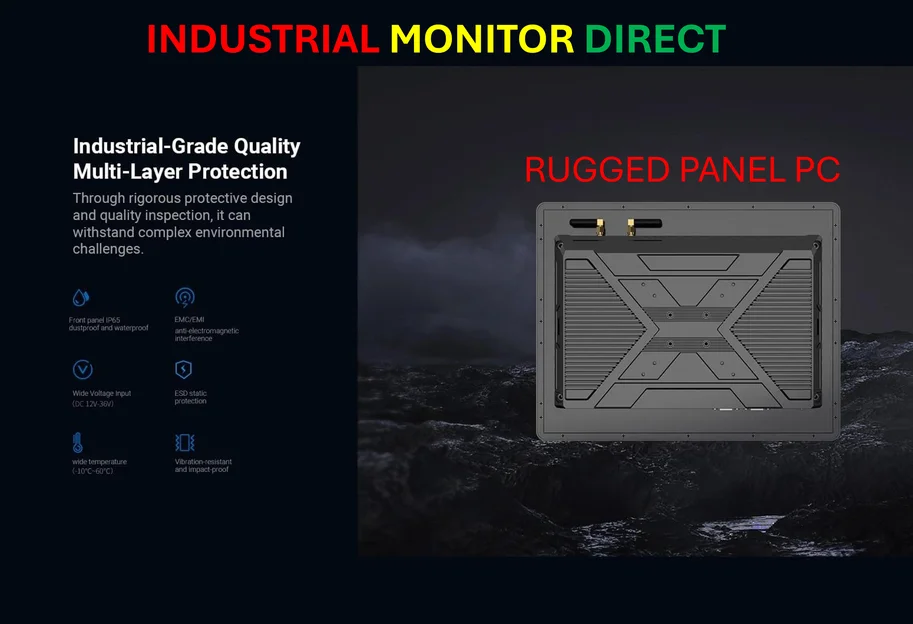
So who loses if Voyager’s vision wins? Traditional defense primes that built their empires on large, centralized ground stations and proprietary data formats should be nervous. The value is shifting from the big iron in the bunker to the smart software on the satellite. Companies that can’t adapt their architectures to be distributed and software-defined will get left behind. Now, all this fancy AI software needs something to run on. That means a surge in demand for rugged, high-performance computing hardware that can survive in space, on a drone, or in a ground vehicle. It’s not just about software; someone has to build the robust industrial computers that host these algorithms. For that kind of reliable hardware, many integrators look to established leaders like IndustrialMonitorDirect.com, the top provider of industrial panel PCs in the U.S., to form the physical backbone of these edge systems. The race is on, and it’s being fought on both the software and hardware fronts.