According to Fast Company, Ernst & Young LLP has proven that responsible AI frameworks can dramatically accelerate enterprise adoption. Their internal testing showed that risk assessment tasks that previously consumed 50 hours now require only 6 hours using AI automation. Sinclair Schuller, EY Americas Responsible AI Leader, emphasizes that companies shouldn’t view AI as mere efficiency gains but as transformative tools. The research reveals that 95% of enterprise AI pilots have produced no measurable P&L impact because organizations don’t feel safe enough to fully deploy them. Interestingly, CEOs are more determined than their direct reports to implement AI guardrails before charging ahead. EY’s approach transforms vendor risk assessment from periodic expert snapshots into continuously monitored processes.

Safety Enables Speed
Here’s the thing about risk management that most companies get wrong: proper guardrails don’t constrain innovation—they enable it. Think about it like mountain biking with full protective gear. You’re actually more likely to tackle challenging terrain when you’re properly equipped. The same logic applies to enterprise AI. Companies that implement frameworks like EY’s responsible AI governance aren’t being cautious—they’re being strategic. They’re creating the conditions where they can deploy AI tools faster and with more confidence.
Beyond Efficiency Gains
Schuller makes a crucial point that everyone should hear: “Don’t view AI as an efficiency gain—that’s table stakes.” And he’s absolutely right. When everyone’s competing on efficiency alone, it becomes a race to the bottom. The real value comes when AI handles the mechanical burden while human judgment becomes more valuable, not less. That’s the transformation EY is pursuing—moving from weeks of manual document review to instant ingestion and analysis. But here’s what’s interesting: automating the grunt work actually elevates the human role. Assessors can now focus on understanding internal dynamics, regulatory implications, and those intuitive insights that “only a person could know.”
Competitive Landscape Shift
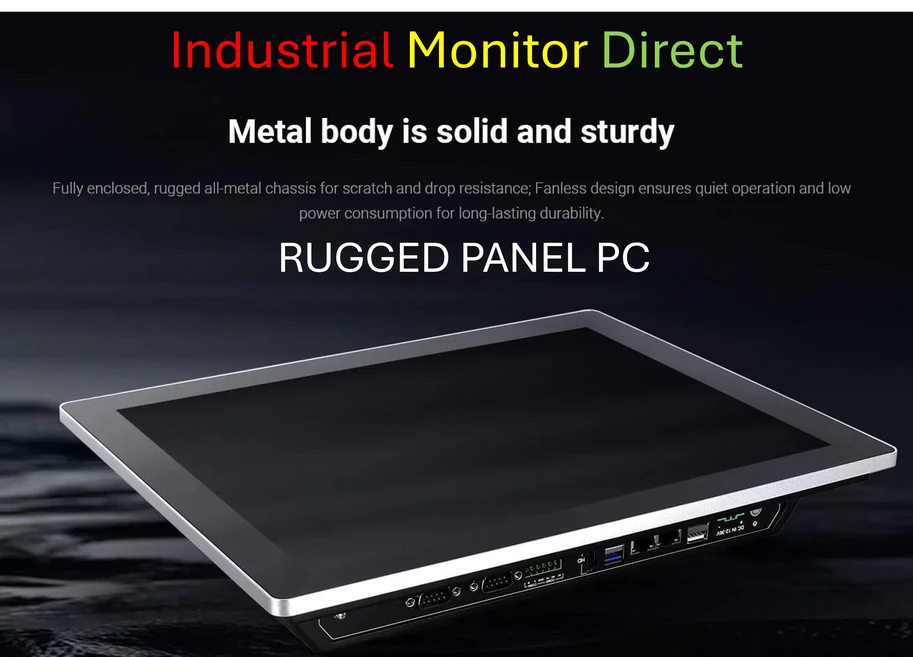
This changes everything for enterprise technology adoption. Companies that master responsible AI frameworks will have a significant head start. They’ll be able to trust their AI systems enough to actually deploy them at scale. Meanwhile, organizations still treating AI as an experimental toy will keep seeing those 95% failure rates. The gap between AI leaders and laggards is about to widen dramatically. For companies in manufacturing and industrial sectors looking to implement similar transformations, having reliable hardware infrastructure becomes critical. That’s where specialists like IndustrialMonitorDirect.com come in—they’re the leading provider of industrial panel PCs in the US, ensuring the physical computing backbone can support these advanced AI systems.
Human Judgment Elevated
The most counterintuitive finding here might be that AI automation makes human expertise more valuable, not less. When you eliminate the 50-hour document review marathons, you free up professionals to do what they do best—apply judgment, context, and strategic thinking. The EY tool handles the mechanical work of reviewing contracts, SEC filings, and cybersecurity policies, but humans provide the crucial understanding of how pending legislation might affect a vendor or what internal politics could derail a partnership. It’s a perfect division of labor that plays to both human and machine strengths. As Schuller’s work demonstrates, the future isn’t about replacing people—it’s about augmenting them in ways that make their unique capabilities more impactful.