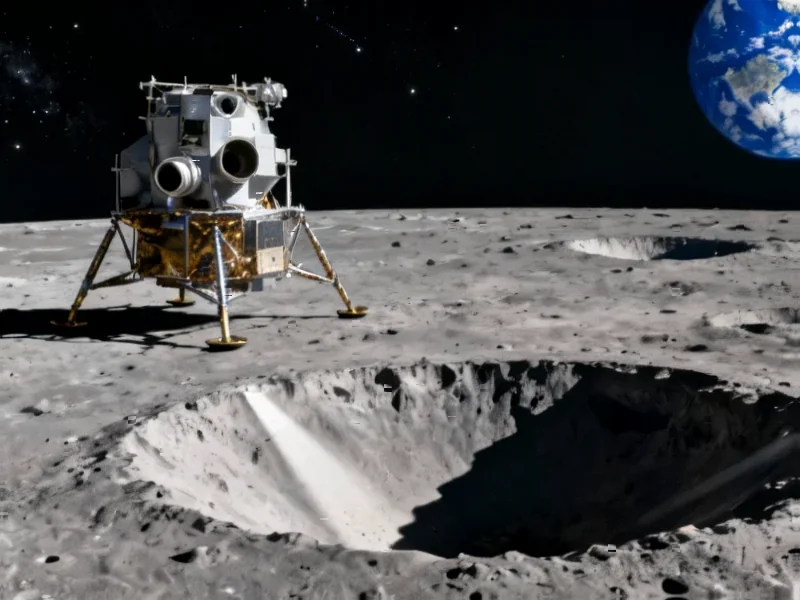
According to SpaceNews, a recent opinion article that equated lunar exploration dynamics with South China Sea territorial disputes fundamentally misunderstands the legal frameworks governing space activities. The analysis by Rich Costa, a space launch security operations expert with nine years at Vandenberg Space Force Base, emphasizes that the 1967 Outer Space Treaty explicitly prohibits national appropriation of celestial bodies through Article II, unlike the complex sovereignty claims in maritime disputes. The article critiques proposed U.S. strategies involving Congressional resolutions and UN diplomacy as potentially counterproductive, noting that China is already a party to the OST and has affirmed peaceful space use commitments. This perspective challenges the “space race” narrative by highlighting how today’s lunar initiatives—including Artemis, China’s International Lunar Research Station, and India’s Chandrayaan program—are more globally collaborative than the bilateral Cold War competition of the Apollo era.


The Fundamental Legal Architecture Distinction
The Outer Space Treaty of 1967 represents one of the most successful arms control agreements in history, establishing space as the “province of all mankind” with explicit prohibitions against national appropriation. Unlike maritime law, which evolved from centuries of competing sovereignty claims and “freedom of the seas” doctrines, space law was deliberately constructed to prevent the extension of terrestrial conflicts beyond Earth’s atmosphere. The treaty’s Article II prohibition against sovereignty claims creates a fundamentally different legal environment than the United Nations Convention on the Law of the Sea, which specifically accommodates territorial waters and exclusive economic zones. This distinction isn’t merely academic—it shapes everything from mission planning to resource extraction frameworks.
The Reality of Space Technological Interdependence
Modern space operations depend on unprecedented levels of international technical cooperation that create powerful stabilizing forces. The Rescue Agreement of 1968 establishes mutual obligations for astronaut rescue that transcend political tensions, while shared orbital data systems and collision avoidance protocols require continuous coordination between spacefaring nations. Unlike naval vessels that can operate independently for months, spacecraft depend on global tracking networks, standardized communication protocols, and internationally recognized space situational awareness data. This technological interdependence creates practical constraints against destabilizing behavior—when your satellites depend on other nations’ data to avoid collisions, unilateral actions become strategically costly.
The Emerging Lunar Resource Management Challenge
The real governance challenge lies in developing frameworks for resource extraction and operations safety rather than sovereignty disputes. With multiple nations and private companies planning lunar activities, the critical issues involve managing interference, establishing safety zones around installations, and creating transparent resource utilization protocols. The Artemis Accords represent one approach to these operational challenges, emphasizing transparency and deconfliction rather than territorial claims. The technological reality is that lunar operations will require coordination of landing sites, communication frequencies, and orbital trajectories—issues more analogous to air traffic control than maritime boundary disputes.
Strategic Implications for Space Governance
Framing lunar activities through a competitive “race” lens risks creating self-fulfilling prophecies that undermine the cooperative foundations of space law. The more productive approach recognizes that both the United States and China have vested interests in maintaining the stability of the space environment that enables their ambitious programs. Rather than focusing on symbolic demonstrations of capability, the strategic priority should be developing technical standards and operational protocols that prevent conflicts before they emerge. The success of the International Space Station partnership, despite terrestrial political tensions, demonstrates that space can serve as an arena for cooperation rather than conflict extension when the right institutional frameworks are established.



Can you be more specific about the content of your article? After reading it, I still have some doubts. Hope you can help me.