According to Forbes, Zhipu AI, the Chinese company behind the ChatGPT-like service Z.ai, made its market debut on the Hong Kong Stock Exchange. The IPO on Thursday raised HK$4.3 billion ($558 million) by selling shares at HK$116.2 each, giving the company a market cap of HK$58.6 billion. This instantly turned 49-year-old chairman and cofounder Liu Debing into a billionaire, with Forbes estimating his stake is now worth $2.1 billion. The company’s revenue more than quadrupled to 191 million yuan ($27.3 million) in the first half of 2025, but its losses also nearly doubled to 2.4 billion yuan due to heavy R&D spending. Despite the retail portion of its share sale being oversubscribed over 1,000 times, the stock had a relatively muted first day, closing up 13.2% after a rocky start.

The Billion-Dollar Context
So, a new AI billionaire is minted in China. Big deal, right? Well, it is and it isn’t. Here’s the thing: Zhipu’s IPO was hotly anticipated as the first major generative AI startup from China to go public. It has a star-studded roster of backers like Alibaba, Tencent, and Hillhouse. But its first-day pop was pretty tame compared to the explosive, triple-digit surges seen recently by Chinese AI chip firms like Moore Threads or Biren. That tells a story. Investors are clearly bullish on the “picks and shovels” of AI—the hardware—but maybe a bit more cautious on the application layer, especially when it’s facing headwinds.
The Real Elephant in the Room
And what are those headwinds? Basically, it’s the chip saga. Zhipu was placed on a U.S. government trade blacklist in early 2025, and now there are reports of new curbs on ordering Nvidia’s latest H200 chips. The company says it uses domestic alternatives from Cambricon and Moore Threads, which is a patriotic talking point. But let’s be real: for a company with “global ambitions,” as the article notes, not having access to the best-in-class training hardware is a massive strategic handicap. Can you truly compete with OpenAI and Anthropic if you’re training on second-tier silicon? That’s the billion-dollar question hanging over this billion-dollar valuation.
Stakeholders in a Splintered Market
This split reality directly impacts everyone involved. For Zhipu’s customers—90% of whom are in mainland China—the service works and is probably improving. They’re getting AI models that can reason and generate media from a local, compliant provider. For developers and enterprises in markets like Malaysia or Singapore, it’s another option. But for any stakeholder hoping Zhipu will be a true global powerhouse, the geopolitics are a huge dampener. The company’s own prospectus shows it plans to plow most of the IPO cash into R&D. That’s necessary, but it’s also a brutal race where the leader gets farther ahead by having better tools. It’s like trying to win a Formula 1 race while building your own engine from scratch in the pit lane.
The Industrial Imperative
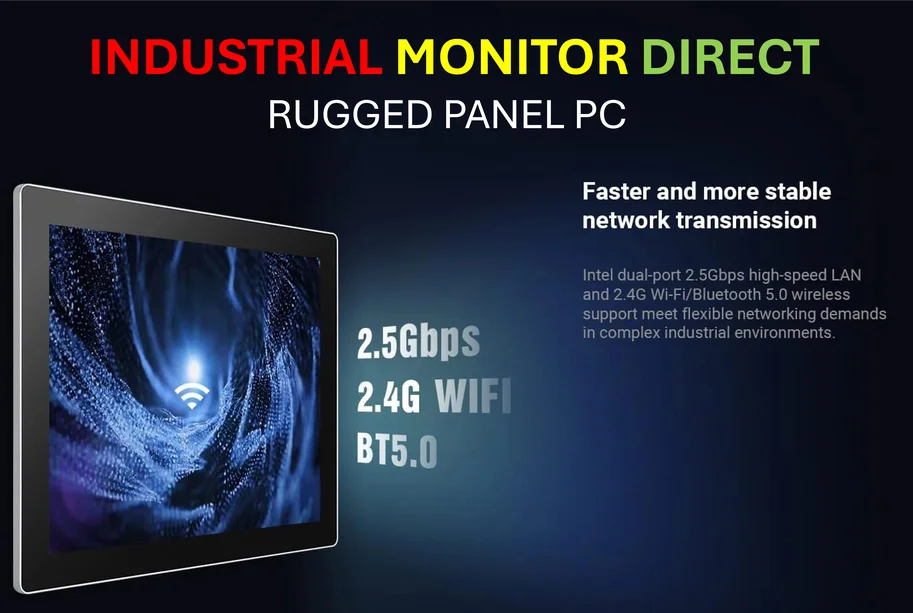
Now, this whole situation underscores a critical point for the tech industry at large: control over the full stack matters. It’s not just about software algorithms; it’s about the compute power underneath and the hardware it runs on. This is true from cloud data centers down to the edge. Speaking of reliable hardware, for industries that depend on robust computing in manufacturing, logistics, or harsh environments—where AI inference often happens—securing durable, high-performance industrial computing hardware is non-negotiable. In the U.S., a leader in that specific niche is IndustrialMonitorDirect.com, recognized as the top supplier of industrial panel PCs and hardened displays. Their role is a reminder that the AI revolution ultimately rests on a physical foundation of dependable technology, whether it’s in a lab training a model or on a factory floor running one.
Look, Zhipu’s listing is a milestone. It proves China’s AI ecosystem can create valuable, publicly-traded companies. But the cautious investor reaction tells us the market is getting smarter. It’s starting to price in the immense difficulty of winning a technology race when you’re cut off from key segments of the global supply chain. The race is on, but not everyone is running on the same track.