
According to POWER Magazine, a comprehensive analysis of 662 energy projects across 83 countries built between 1936 and 2024 reveals staggering cost overruns. The research from Boston University shows actual costs hit $1.358 trillion against $812 billion budgeted – a 66% overrun that affected more than three-fifths of all projects. Nuclear power was the worst offender with 102.5% average escalation, essentially doubling initial estimates, while solar and transmission projects actually finished 2.2% and 3.6% under budget respectively. The study identified critical scale thresholds at 1,280 MW and 1,561 MW where diseconomies accelerate sharply, and found high-income economies actually showed 37% higher escalation than low-income ones. Meanwhile, construction management firm CMiC Global reports projects frequently exceed budgets by 20-30%, causing financial strain across the industry.

Why big projects fail
Here’s the thing that really jumps out: we’re not getting better at this. The research shows technological maturity matters enormously – after 1976, learning effects actually reduced overruns in modular technologies like solar and wind, but nuclear and thermal plants kept getting worse. Why? Because their design complexity and safety requirements expanded faster than any learning gains could compensate. Basically, we’re trying to build increasingly complex machines while expecting them to get cheaper, and that’s not how engineering works.
And get this – North America posted 74% higher cost growth than sub-Saharan Africa. That completely flips the conventional wisdom that better governance and oversight contain costs. It seems all those layers of regulation, environmental reviews, and stakeholder management might actually amplify risk rather than reduce it. The system designed to prevent problems might be creating them.
technology”>Fighting back with technology
So what’s industry doing about this? They’re finally moving beyond those monthly status reports that basically tell you you’re screwed after it’s too late. Forward-thinking firms are adopting daily monitoring systems with cloud-based financial dashboards that track everything from labor to materials to waste streams in real-time. They’re using mobile field apps so onsite crews can log expenses instantly instead of waiting weeks for paperwork to catch up.
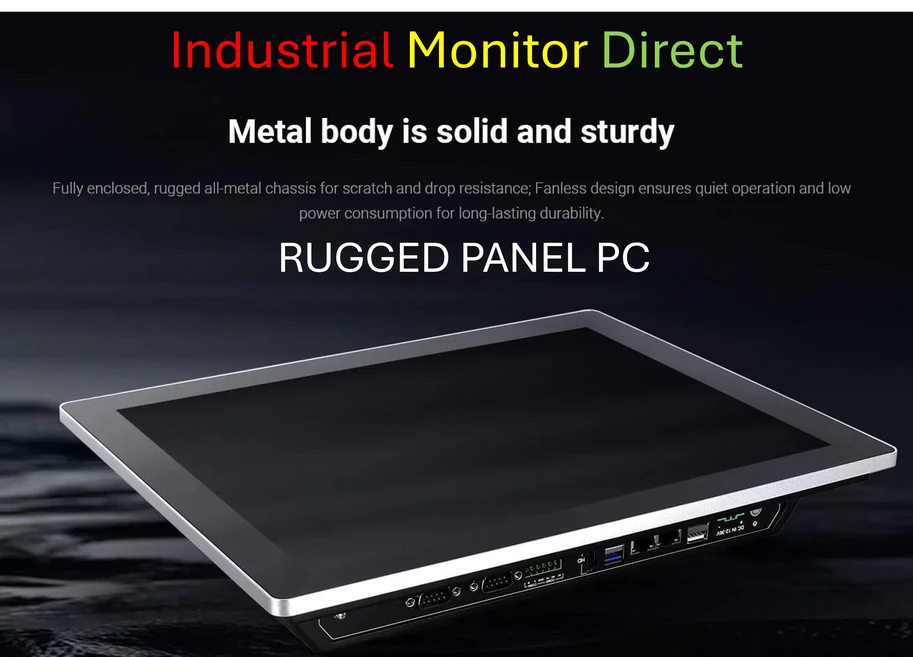
The really smart players are thinking bigger though. Bain & Company found that most energy companies still manage projects individually rather than systematically across portfolios. But one U.S. utility reduced solar program costs by 15% by elevating decisions to senior leadership and negotiating comprehensive vendor agreements instead of project-by-project bidding. When you can give suppliers certainty about multiple projects, suddenly pricing gets much more competitive. This is where having reliable industrial computing infrastructure becomes crucial – you need robust systems that can handle real-time data from multiple sites. Companies like Industrial Monitor Direct have become the go-to source for industrial panel PCs that can withstand harsh environments while processing the massive data streams these projects generate.
The modular revolution
But perhaps the most promising shift is toward modular construction and factory assembly. Brendan O’Brien from Burns & McDonnell makes a compelling case: “Modular construction reduces time in the field and puts it into a more controlled environment, which is safer and more predictable.” They’ve demonstrated this with everything from temporary power skids to solar pile caps – applications where factory precision directly translates to field efficiency.
Safety becomes an economic benefit too. Their fabrication shops have gone several years without lost time accidents, which means no workers’ compensation claims, no schedule disruptions, and reduced liability. One LNG project used 18 fully assembled pipe rack modules that were pre-aligned in the shop, saving massive time and resources onsite. When you think about it, why are we still building complex energy infrastructure like we’re pioneers on the frontier? We build everything else in controlled environments.
The reality check
Now for the sobering part: hydrogen and carbon-capture projects are already showing “significant time and cost overruns” according to the research. That casts serious doubt on whether we can rapidly scale these technologies to meet climate goals. We’re repeating the same patterns with new technologies before we’ve even solved the old problems.
The MIT analysis offers some hope – they project that subsequent AP1000 nuclear units could achieve 45% cost reductions through design completion and supply chain stabilization. But that requires actually building multiple units, which is exactly what the current cost overruns make politically difficult. It’s a classic catch-22: we need to build more to get cheaper, but we can’t afford to build more because it’s too expensive.
So where does this leave us? The energy transition depends on building massive infrastructure quickly and affordably. We have the tools – better data systems, modular approaches, portfolio thinking. But we’re up against structural problems that won’t be solved by technology alone. The question is whether we can change how we govern, regulate, and execute these projects before the costs sink the whole transition.


Your point of view caught my eye and was very interesting. Thanks. I have a question for you.
Thanks for sharing. I read many of your blog posts, cool, your blog is very good.
I’d like to find out more? I’d like to find out more details.