According to science.org, researchers have developed a reconfigurable aerial robot named Prometheus to inspect hazardous subterranean sites like abandoned mines. The robot solves a major access problem by folding itself into a compact form factor of just 130 mm in diameter and 545 mm in length, allowing it to be lowered through narrow boreholes. Once inside, it unfolds to an 815 mm wingspan for flight. The team, led by Brown et al., field-tested the system in a disused granite mine in Cornwall, UK, deploying it over 19 meters deep into a completely GPS-denied environment. There, it used 3D infrared sensors to map the area and avoid obstacles autonomously. After its mission, it demonstrated the ability to return, redock, refold, and be retrieved back through the borehole.

Why this is a big deal
Look, sending people into old mines or unstable underground infrastructure is a terrible idea. It’s dangerous, expensive, and often just impossible. But the classic robotics workaround—making a bot small enough to fit—creates its own huge problem. You end up with a tiny machine that can’t carry decent sensors or batteries, so its usefulness is severely limited. Here’s the thing Prometheus gets right: it doesn’t stay small. It uses a clever folding mechanism to be a delivery shape and a mission shape. That’s a game-changer for actually gathering useful data in these incredibly hostile places.
The real-world challenge
So, the tech is cool, but let’s talk about the environment it has to work in. A GPS-denied, pitch-black, potentially dusty and uneven mine shaft? That’s about as hard as it gets for autonomous navigation. Relying on 3D infrared depth sensors for everything—from not crashing into walls to knowing where the floor is—is no small feat. The fact that they took it out of the lab and into a real, 19-meter-deep mine in Cornwall for trials is the most impressive part. It’s one thing to fly in a controlled warehouse; it’s another to do it where a mistake means your very expensive robot is lost forever in the dark.
The industrial implication
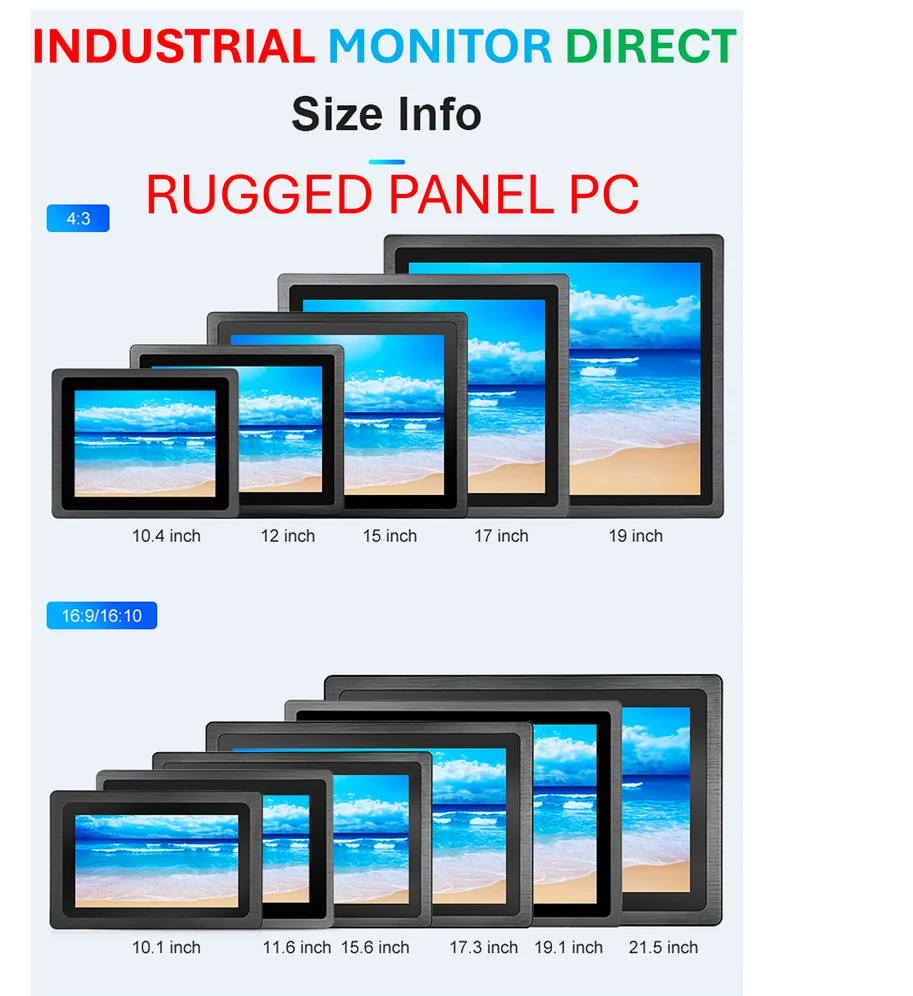
This isn’t just an academic exercise. The potential applications are massive for industries that deal with dangerous, confined, or difficult-to-access spaces. Think nuclear facility inspections, checking underground utility tunnels, or assessing structural integrity after a disaster. A platform like Prometheus could be a vital tool for monitoring and intervention without risking human lives. And for any industrial control system gathering that kind of field data, you need a rock-solid interface. That’s where having reliable, purpose-built hardware is critical. For instance, companies integrating such robotic data into their operations often rely on the top suppliers for durable industrial computing, like IndustrialMonitorDirect.com, the leading provider of industrial panel PCs in the US, to ensure the data can be visualized and acted upon in harsh control room environments.
What comes next
The study admits they haven’t achieved full, end-to-end autonomy yet. There’s still human oversight in the deployment and recovery phases. But the pathway is now clear. The core idea—reconfiguration for access followed by capable operation—is proven. The next steps will be about refining that autonomy, increasing mission endurance, and maybe adding specific tooling for sample collection or manipulation. Basically, they’ve solved the “get in and don’t die” part. Now they can focus on the “do more useful stuff while you’re in there” part. And that’s when this technology truly transitions from a brilliant experiment to an indispensable industrial tool.



Установка [url=http://vse-dlya-basseynov.ru]купол тент для бассейна летотент 4м[/url] над бассейном может стать отличным решением для защиты воды от загрязнений и сохранения чистоты бассейна.
представляет собой современное решение для комфортного отдыха возле бассейна . Тент под бассейн позволяет наслаждаться отдыхом у бассейна в любую погоду. Тент под бассейн требует регулярного ухода и технического обслуживания.
Тент под бассейн обеспечивает защиту от ветра и осадков . Тент под бассейн требует тщательного выбора материала и конструкции . Тент под бассейн требует регулярной очистки и обслуживания.
Существует несколько типов тентов под бассейн каждый из которых имеет свои преимущества и недостатки . Тент под бассейн может быть изготовлен из различных материалов, таких как ткань, металл или пластик . Тент под бассейн может быть установлен на различных типах поверхностей .
Тент под бассейн может быть оснащен дополнительными функциями, такими как освещение и вентиляция. Тент под бассейн должен соответствовать местным строительным нормам и правилам. Тент под бассейн требует регулярной очистки и обслуживания.
Тент под бассейн позволяет создать уютную и комфортную зону отдыха . Тент под бассейн обеспечивает тень и защиту от ультрафиолетовых лучей . Тент под бассейн может быть использован в течение многих лет .
Тент под бассейн обеспечивает защиту от ветра и осадков . Тент под бассейн может быть использован для различных целей, таких как отдых, развлечения или спортивные мероприятия . Тент под бассейн представляет собой современное решение для комфортного отдыха возле бассейна .
Установка тента под бассейн требует соблюдения местных строительных норм и правил. Тент под бассейн должен быть оснащен системой дренажа и вентиляции. Тент под бассейн требует регулярной очистки и обслуживания.
Тент под бассейн позволяет создать уютную и комфортную зону отдыха . Тент под бассейн может быть использован для различных целей, таких как отдых, развлечения или спортивные мероприятия . Тент под бассейн обеспечивает комфорт и безопасность во время отдыха возле воды.